Sourcing reusable plastic crates for commercial distribution across South Africa requires far more than comparing unit prices on a supplier quotation sheet. Whether you manage a citrus, avocado, or stone-fruit packhouse in Limpopo or the Western Cape, operate a fast-moving consumer goods (FMCG) regional distribution center (DC) in Gauteng, or coordinate third-party logistics (3PL) fleets along the N1, N2, and N3 freight corridors, the reusable plastic crates moving through your facility dictate your pallet density, cold-room airflow, product damage rate, and reverse-logistics diesel spend.
For decades, single-use corrugated cardboard cartons and heavy, rigid lug boxes dominated Southern African supply chains. Yet rising virgin paper pulp costs, high humidity degradation in coastal hubs like Durban, Gqeberha, and Cape Town, and escalating long-haul backhaul fuel tariffs have compressed B2B operating margins. Forward-looking procurement managers, retail merchants, agricultural exporters, and industrial distributors are transitioning to standardized reusable plastic crates engineered for multi-year closed-loop circulation.
This comprehensive B2B procurement and engineering guide breaks down the exact technical specifications, South African 1200 × 1000 mm pallet modular configurations, cold-chain material science, and landed import economics you need to evaluate before placing a bulk factory order. Backed by the manufacturing and international export capabilities of KEYUN Reusable Plastic Logistics Solutions, we examine how to match collapsible vented crates, solid-wall attached lid containers, compatible aluminum crate dollies, and hygienic plastic pallets to your exact operational workflow.
1. Why South African B2B Supply Chains Are Replacing Cardboard With Reusable Plastic Crates
In South Africa’s commercial distribution landscape, secondary transit packaging has shifted from a disposable consumable expense (OPEX) to a depreciable operational asset (CAPEX) that systematically lowers cost per trip. According to supply chain research published by the Food and Agriculture Organization (FAO) on reusable plastic crate management, switching from single-use cartons to durable returnable transit packaging (RTP) reduces post-harvest mechanical bruising by over 60% and eliminates recurring packaging waste across multi-stop distribution networks.
For South African B2B buyers, agricultural co-ops, and commercial merchants, four structural pressures make reusable plastic crates the superior operational choice in 2026:
- Eliminating Coastal Humidity and Cold-Store Collapse: Corrugated cardboard loses up to 50% of its vertical stacking compression strength when exposed to 85%–95% relative humidity in refrigerated hydro-cooling rooms or coastal warehouses in KwaZulu-Natal and the Eastern Cape. Injection-molded polypropylene (PP) reusable plastic crates maintain rigid dimensional stability regardless of condensation, wet washing, or high-humidity cold storage.
- Slashing Empty Return Transport Volume on Long-Haul Routes: Moving freight between Johannesburg, Durban, Bloemfontein, and Cape Town involves vast geographic distances. Rigid fixed-wall crates force fleet operators to haul “expensive air” on the return leg. Selecting collapsible plastic crates for return logistics reduces empty container height by up to 75.4%, cutting backhaul truck requirements from four trailers down to one.
- Compliance With Export and Retail Hygiene Standards: Perishable producers governed by the Perishable Products Export Control Board (PPECB) cold chain management protocols and domestic retailers aligned with the Consumer Goods Council of South Africa (CGCSA) require washable, non-absorbent, splinter-free surfaces that prevent cross-contamination and optimize forced-air cooling.
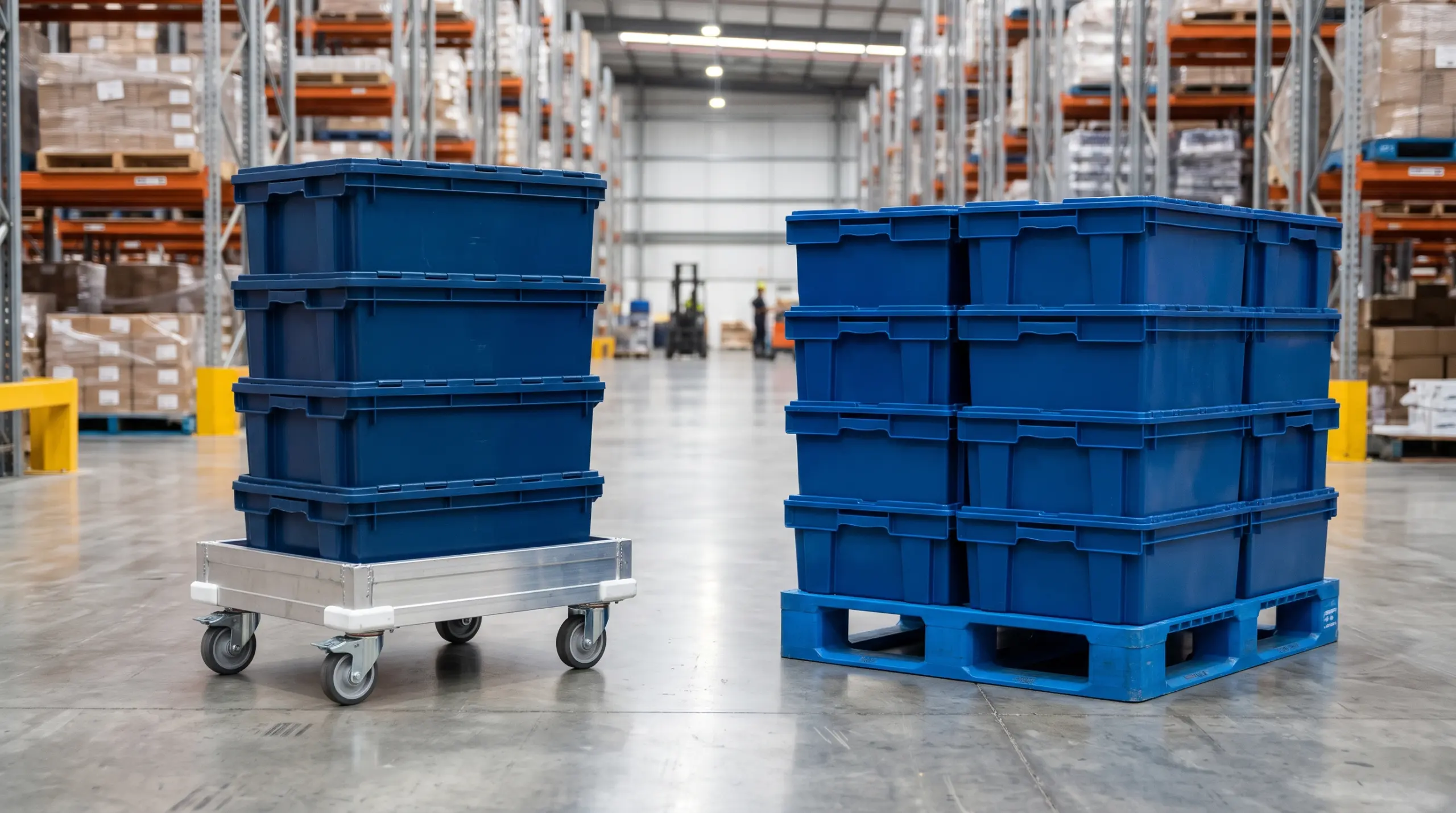
- One-Touch Retail Replenishment (“Field-to-Aisle” Handling): Modern ventilated reusable plastic crates allow farm packers or central warehouse pickers to pack produce, bakery trays, or packaged groceries once. The same crate moves from palletized transport onto a mobile crate dolly and straight onto the supermarket retail display rack—eliminating double handling and labor-intensive shelf restocking.
2. Collapsible Plastic Crates vs Attached Lid Containers: Technical Comparison for B2B Buyers
One of the most frequent commercial investigation questions procurement teams ask is: Should our operation standardize on vented folding crates or solid-wall attached lid containers? Evaluating collapsible plastic crates vs attached lid containers requires analyzing your cargo vulnerability, temperature regime, security protocols, and reverse-logistics footprint before investing in reusable plastic crates.
| Specification & Operational Metric | Collapsible Plastic Crates (e.g., KEYUN TY6040195W-S) | Compact Folding Crates (e.g., KEYUN KS403024W) | Attached Lid Containers (e.g., KEYUN CX6040225C) |
|---|---|---|---|
| Primary B2B Application | Fresh produce, agriculture, bakery, supermarket retail replenishment, general warehousing | Small-parts picking, berry/packaged produce, convenience store restocking, light hardware | Pharmaceuticals, cosmetics, electronics, automotive components, high-value retail distribution |
| External Footprint (L × W × H) | 600 × 400 × 195 mm |
400 × 300 × 245 mm (240 mm drawing ref.) |
605 × 405 × 225 mm (also available in 200, 310, 340 mm heights) |
| Internal Usable Dimensions | 565 × 365 × 180 mm |
365 × 265 × 230 mm |
511 × 324 mm lower base (CX6040225C) |
| Empty Return Mechanism | Folds flat vertically to 48 mm height (75.4% space reduction) |
Folds flat vertically to 70 mm height (71.4% space reduction) |
Tapered solid walls nest inside each other with hinged lids flipped open (~65%–70% space saving) |
| Unit Tare Weight | 1.75 kg |
1.06 kg |
2.43 kg (1.66 kg to 2.98 kg across series) |
| Rated Unit Load Capacity | 30–35 kg per crate (application dependent) |
10 kg per crate (5-high reference stack) |
30–35 kg per container (stackable with lids closed) |
| Wall & Base Construction | Ventilated mesh panels and vented base for rapid cold-chain airflow | Ventilated mesh sides and base with integrated end handholds | Solid, enclosed walls and smooth base for dust, moisture, and visual protection |
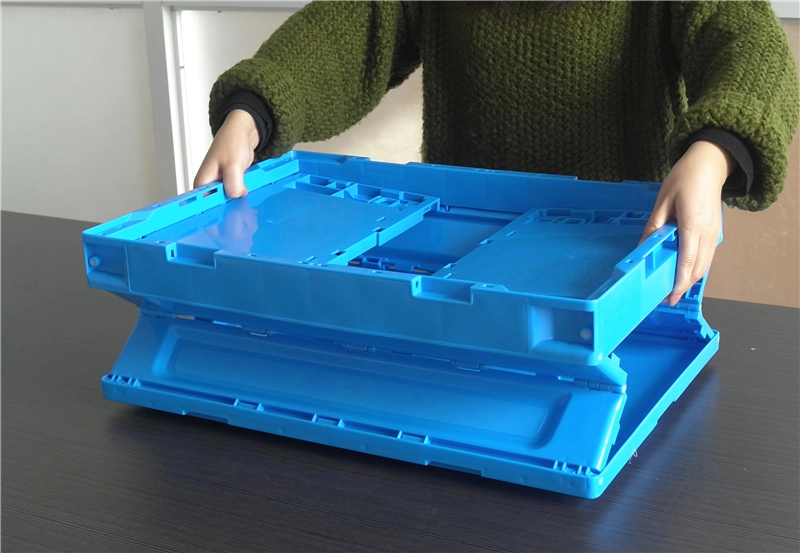
Ventilated Collapsible Plastic Crates (TY6040195W-S & KS403024W) for Agriculture and Supermarket Replenishment
When your primary cargo consists of respiring agricultural produce (tomatoes, avocados, citrus, stone fruit, table grapes, or leafy greens), baked goods, or high-turnover retail items, KEYUN Collapsible Plastic Crates provide the highest cubic efficiency in the return loop.
The flagship TY6040195W-S model is engineered around a standard 600 × 400 × 195 mm external footprint with an internal usable volume of 565 × 365 × 180 mm. Weighing just 1.75 kg, it supports a working unit load of 30–35 kg. Once unloaded at a retail store in Sandton, Centurion, Umhlanga, or Bellville, a store operative simply releases the side panels and folds the crate down to a flat 48 mm profile—without requiring any tools or separate fasteners. Four folded reusable plastic crates occupy slightly less vertical height (192 mm) than a single open crate (195 mm).
Furthermore, the open wall panels and perforated base of these reusable plastic crates allow chilled air inside forced-air pre-cooling tunnels and refrigerated reefer trailers to penetrate the core of the pallet load rapidly. Removing field heat quickly extends shelf life for domestic supermarket chains and helps exporters pass strict phytosanitary cold-sterilization inspections at South African ports.
For smaller SKUs, split-case order picking, or compact retail shelves, the 400 × 300 mm Folding Plastic Crate (Model KS403024W) offers a half-size modular footprint (400 × 300 × 245 mm external, 365 × 265 × 230 mm internal) that folds down to 70 mm and handles up to 10 kg per unit, with factory orders starting from just 50 units. Many B2B merchants combine both 600 × 400 mm and 400 × 300 mm reusable plastic crates within the same distribution network because two 400 × 300 mm crates stack cleanly atop a single 600 × 400 mm crate footprint.
Solid-Wall Attached Lid Containers (CX6040225C Series) for High-Value Retail, Pharma, and Automotive Parts
In contrast, if your South African distribution operation moves high-pilferage consumer goods, sensitive electronics, pharmaceutical supplies, cosmetics, or precision automotive spares (such as in Rosslyn, Silverton, East London, or Gqeberha manufacturing hubs), open ventilated crates expose inventory to dust, rain ingress during cross-docking, and opportunistic theft.
Here, KEYUN Attached Lid Containers—commonly referred to in B2B logistics tenders as tote boxes or crocodile-lid containers—solve two critical problems simultaneously:
- Zero Lost Lids and Tamper-Evident Security: The CX6040225C (
605 × 405 × 225 mm,2.43 kg) features two permanently attached, interlocking saw-tooth hinged lid panels. When closed, the reinforced upper rim forms a flat, high-strength load-bearing surface for vertical stacking under a30–35 kgunit load. Molded locking holes at both ends accept numbered plastic cable ties or tamper-evident security seals, giving dispatch managers indisputable proof if a container was opened in transit between the central warehouse and the receiving retail branch. - Tapered Nesting Efficiency: Unlike folding crates that rely on multi-panel hinges, attached lid containers utilize a solid, slightly tapered body (
605 × 405 mmupper rim tapering to511 × 324 mmat the base). When empty, the hinged lids flip 180 degrees outward against the sidewalls, allowing empty containers to nest deeply inside one another. Alongside theCX6040225C, KEYUN manufactures the shallower CX604020W (600 × 400 × 200 mm,1.66 kg), the deeper CX604033C (605 × 405 × 340 mm,2.98 kg), and the oversized CX654431W (650 × 440 × 310 mm,2.80 kg) to accommodate diverse SKU volumes.
Branch Transfers and Returnable Distribution
Folding crates can be considered for moving suitable goods between branches, warehouses or other locations that have an organised container-return process.
The crate holds goods on the outward journey. After unloading, the empty container can be folded for collection or storage before another use. This arrangement is worth evaluating when the same locations exchange goods regularly.
Plan the return process as carefully as the delivery. Identify who folds the crates, where empties are stored and how they are counted and collected. The value of reusable containers depends partly on keeping them available for further use, rather than losing them after delivery.
3. 600x400mm Plastic Crates Pallet Configuration on South Africa’s 1200x1000mm Standard Pallets
A costly specification mistake many importers make is purchasing non-modular containers that leave dead space—or worse, cause dangerous overhang—on local pallets. Mastering 600x400mm plastic crates pallet configuration is essential because South Africa’s domestic warehouse, FMCG, and cold-storage infrastructure primarily runs on the 1200 × 1000 mm standard pallet, while certain European fruit export lanes utilize the 1200 × 800 mm Euro pallet.
Because KEYUN designs its core reusable plastic crates around the international modular Euro-norm footprint (600 × 400 mm and its sub-multiple 400 × 300 mm), they achieve 100% surface area utilization on both pallet standards without a single millimeter of overhang:
| Pallet Standard | Pallet Dimensions (L × W) | Compatible Crate Footprint | Crates Per Layer | Layer Arrangement Pattern | Surface Utilization (%) | Empty Folded Crates Per 2.0m Pallet Stack (TY6040195W-S @ 48mm) |
|---|---|---|---|---|---|---|
| South Africa Industrial / Retail Standard | 1200 × 1000 mm |
600 × 400 mm (TY6040195W-S / CX604020W) |
5 Crates / Layer | 3 crates placed 400 mm along 1200 mm edge + 2 crates placed 600 mm along 1200 mm edge |
100.0% (1.20 m² covered) |
190 Crates (38 layers × 5 crates, plus pallet height) |
| South Africa Industrial / Retail Standard | 1200 × 1000 mm |
400 × 300 mm (KS403024W) |
10 Crates / Layer | 3 × 400 mm along 1200 mm edge × 3.33 / pinwheel interlocking layout |
100.0% (1.20 m² covered) |
260 Crates (26 layers × 10 crates @ 70 mm folded height) |
Interlocking 5-Per-Layer Layouts vs Euro 1200x800mm Pallet Footprints
Why does zero overhang matter so much in South African warehousing? If a crate overhangs a 1200 × 1000 mm pallet edge by even 25 mm, the vertical load is no longer supported by the pallet perimeter deck. Furthermore, overhanging reusable plastic crates collide with adjacent pallet loads inside drive-in racking, automated storage and retrieval systems (AS/RS), and tight ISO reefer containers.
On a South African 1200 × 1000 mm pallet, placing three 600 × 400 mm reusable plastic crates side-by-side along their 400 mm width spans 1200 mm × 600 mm. The remaining 1200 mm × 400 mm strip on the pallet deck fits exactly two more 600 × 400 mm crates oriented lengthwise (2 × 600 mm = 1200 mm).
Even better, by rotating alternate layers 180 degrees (“brick-stacking” or cross-bonding), the 3-crate and 2-crate zones overlap across layers, tying the entire pallet load together mechanically. This prevents column splitting during sharp braking on South African road freight routes (such as Van Reenen’s Pass on the N3 or Hex River Pass on the N1) or forklift deceleration inside high-bay distribution centers.
Integrating Aluminum Crate Dollies (QYWG6343) and Plastic Pallets in DC Picking
To maximize material handling throughput and occupational ergonomics, leading B2B operations pair their reusable plastic crates with matched mobile bases and hygienic pallets:
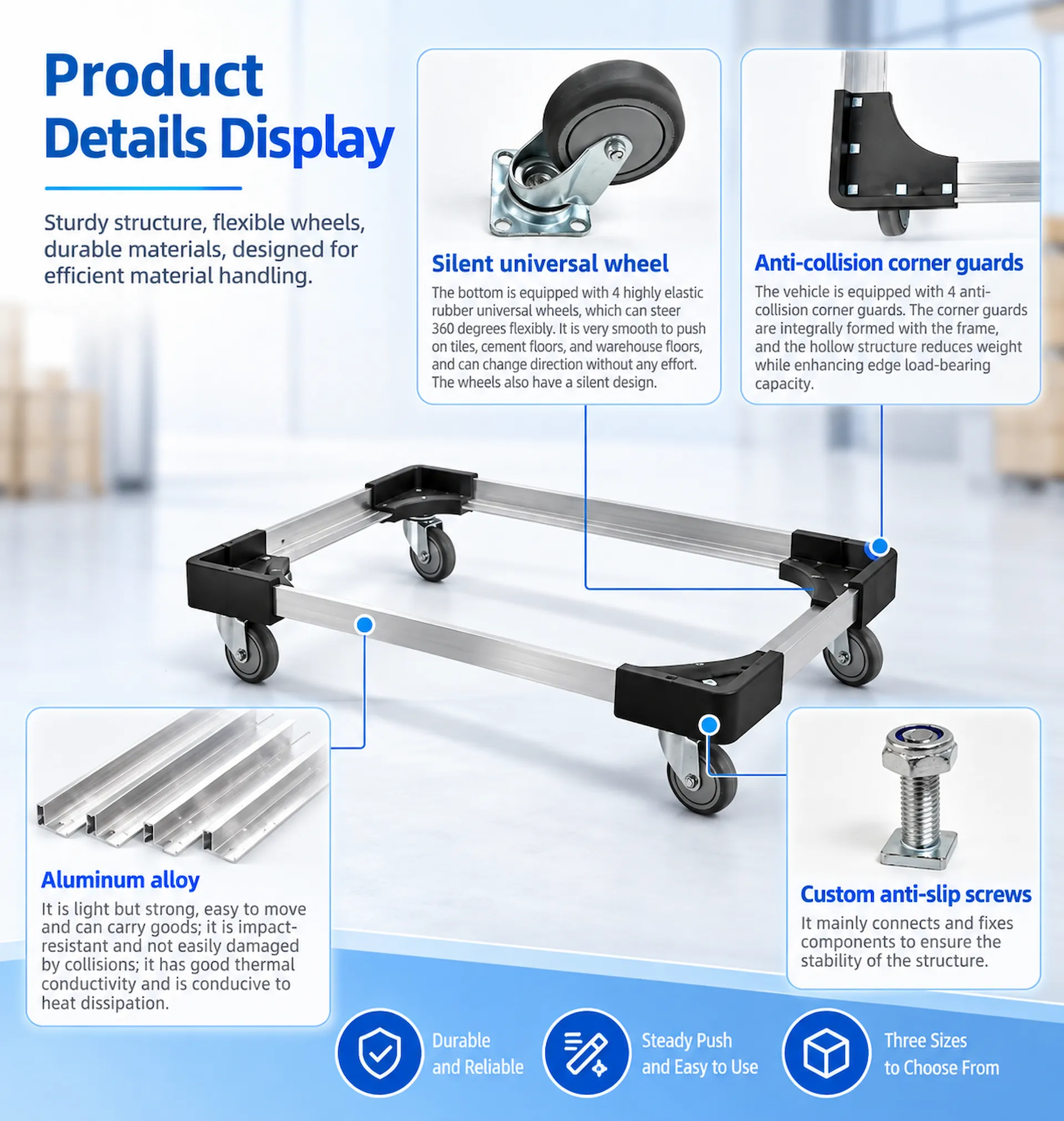
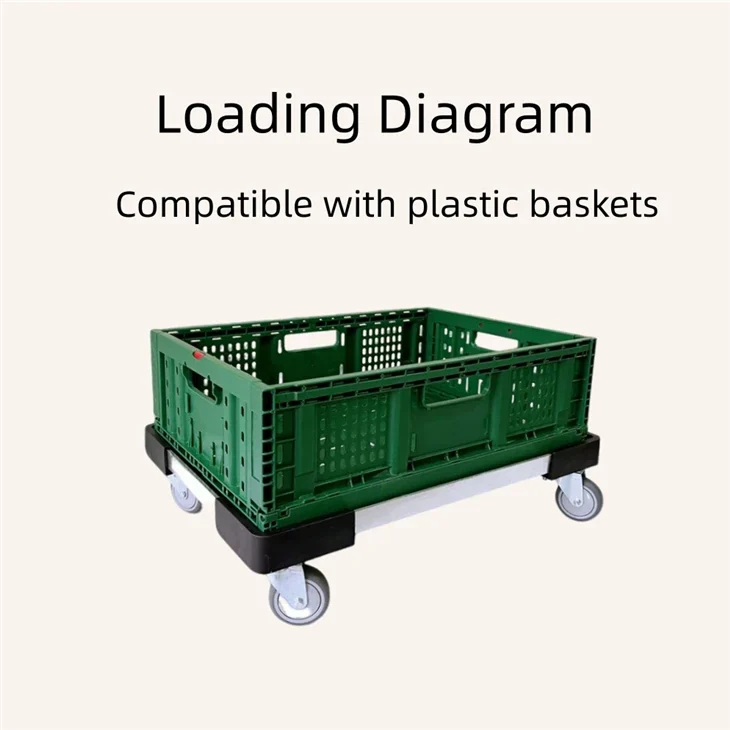
- In-Plant & Retail Aisle Mobility With Aluminum Crate Dollies: Rather than using heavy forklifts or manual carrying for short-distance order picking, production line-side supply, and supermarket replenishment, teams stack
600 × 400 mmcrates onto KEYUN Aluminum Crate Dollies. Specifically, the QYWG6343 Aluminum Crate Dolly features a630 × 430 mmexternal frame with a precision600 × 400 mminternal locating area, a lightweight2.35 kghollow aluminum-alloy chassis, molded corner guards, and four 360-degree swivel rubber casters rated for120–180 kgdynamic loads (with configurations tested up to300 kgstatic load). For larger containers like theCX654431W, the QYWG6848 (650 × 450 mmlocating area,150–200 kgcapacity) provides a secure fit, while the compact QYWG5640 (530 × 370 mmlocating area,100–150 kgcapacity) serves narrower stockroom aisles. - Hygienic Palletization Without ISPM-15 Delays: Combining reusable plastic crates with KEYUN Reusable Plastic Pallets—available in
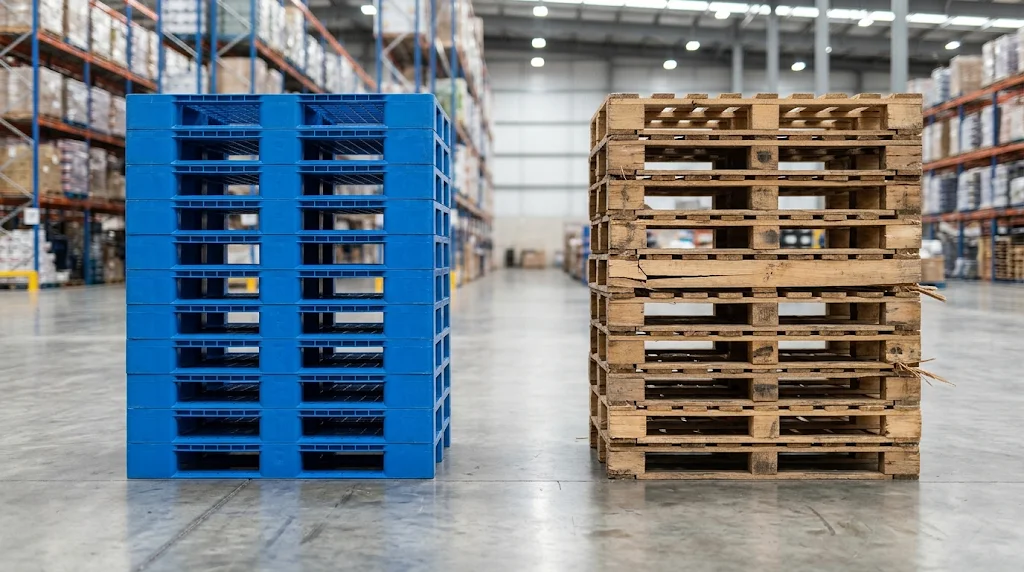
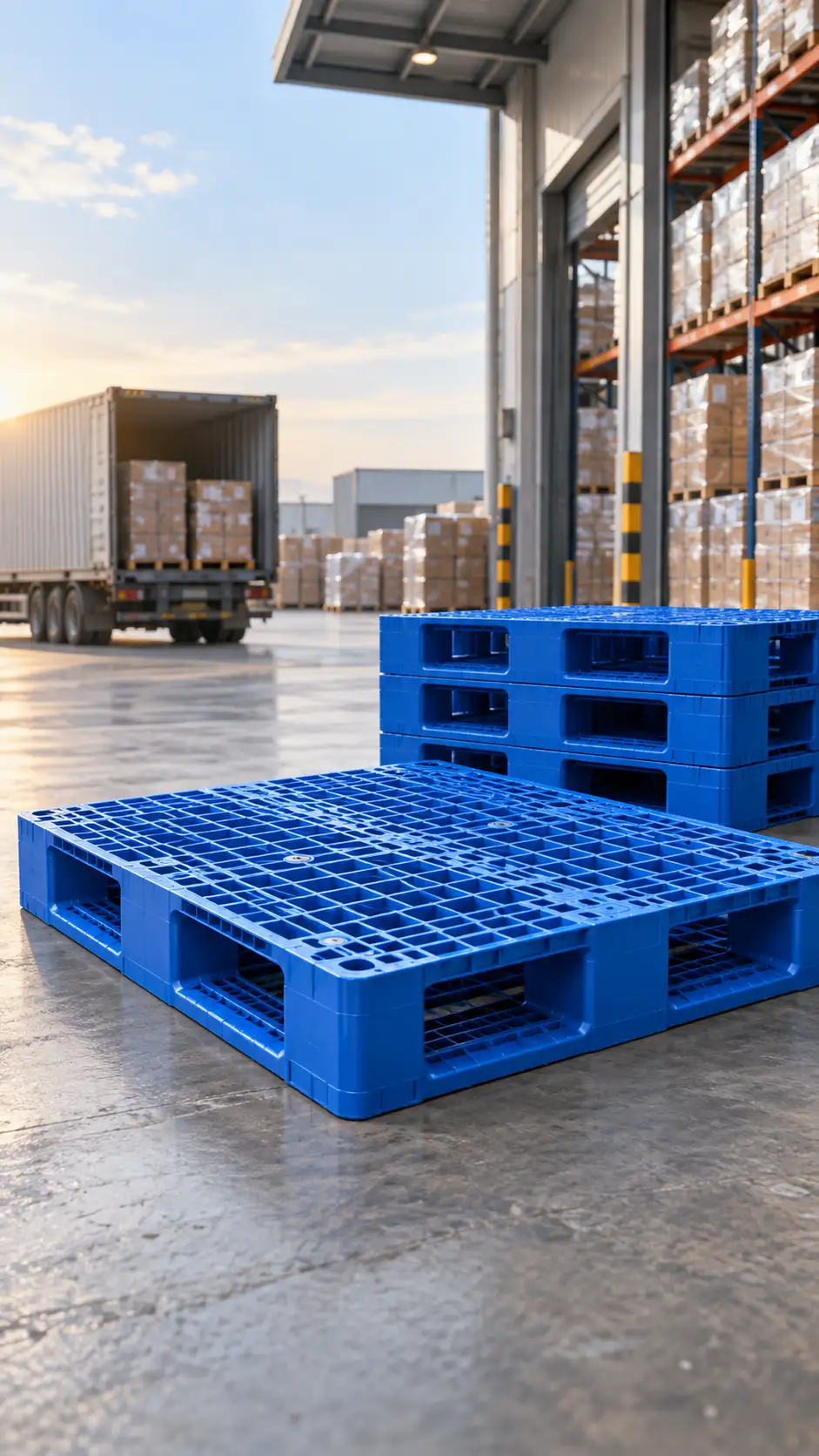
1200 × 1000 mm,1200 × 800 mm, and1200 × 1200 mmfootprints—eliminates wood splinters, protruding nails that puncture crate bases, moisture absorption, and ISPM-15 heat-treatment/fumigation paperwork for cross-border SADC exports (into Namibia, Botswana, Zimbabwe, Zambia, and Mozambique). Buyers can specify nine-leg grid decks for light nested return, nine-leg flat decks for easy food-plant washdown, or steel-reinforced three-runner plastic pallets for heavy-duty warehouse beam racking.
4. Critical Engineering Specifications for Reusable Plastic Crates in Harsh Operating Environments
When comparing quotations from domestic traders and overseas manufacturers, two crates that look identical in a catalogue photograph can perform drastically differently after six months of industrial circulation. Experienced procurement engineers verify four mechanical and material parameters before signing a purchase order for reusable plastic crates:
Virgin Polypropylene (PP) vs Recycled Regrind: Cold Chain Performance at -18°C
The single biggest determinant of crate lifespan—and supplier pricing variance—is polymer resin purity. Low-cost crates are frequently molded from unverified post-consumer recycled regrind or heavily calcium-carbonate-filled plastics. While cheap upfront, recycled blends suffer from polymer chain scission, making them brittle under sub-zero cold storage and prone to rapid UV chalking and stress cracking under South Africa’s high solar radiation.
KEYUN manufactures its featured TY6040195W-S, KS403024W, and CX6040225C reusable plastic crates from 100% brand-new (virgin) polypropylene (PP). Virgin PP delivers three decisive advantages for B2B buyers:
- Verified Low-Temperature Impact Resistance: Representative KEYUN collapsible crates undergo rigorous laboratory qualification, including low-temperature testing at
-18°C, simulated transport vibration tests, static stack load tests, and corner drop tests. - Consistent Dimensional Tolerance Across Batches: Virgin resin shrinks uniformly during injection molding, ensuring that replacement batches of reusable plastic crates ordered 18 or 24 months later still interlock smoothly with your existing crate pool, dollies, and automated conveyor guides.
- Chemical & Thermal Washability: Virgin PP resists chemical degradation from food-safe caustic detergents, quaternary ammonium sanitizers, and high-pressure hot-water crate washers (
55°C–65°C) used in commercial meat, poultry, dairy, and bakery sanitization lines.
Structural Load Ratings, Dovetail Joints, and All-Plastic Hinge Pin Durability
In collapsible crates, over 90% of field failures occur at the corners and hinge mechanisms. When specifying folding reusable plastic crates, inspect three structural details built into KEYUN’s engineering design:
- Reinforced Corner Ribs: In a stacked column of crates, vertical compression forces bypass the side walls and transfer directly down the four corner posts. The TY6040195W-S incorporates dense external reinforcing ribs at all four corners to prevent buckling when stacked 5 to 7 units high under a
30–35 kgunit load. - Secure Dovetail Interlocking Joints: When a crate is loaded with heavy shifting cargo like potatoes, citrus, or bottled beverages, outward lateral pressure pushes against the sidewalls. Precision-molded dovetail joints lock the folding side and end panels together under tension so walls cannot pop open during manual lifting or rough road vibration.
- All-Plastic Pin Construction (Zero Rust, Zero Metal Contamination): Cheap folding crates rely on steel hinge pins that corrode in humid packhouses and trigger false rejects on industrial metal detectors in food processing lines. KEYUN’s TY6040195W-S utilizes an all-plastic pin construction that eliminates exposed metal components entirely, ensuring rust-free washdowns and seamless compatibility with barcode labels and optional UHF/HF RFID tracking tags.
5. Returnable Transit Packaging Cost Calculation: N1/N3 Backhaul & Sea Freight Landed ROI
To win internal budget sign-off from your Chief Financial Officer, Procurement Committee, or Supply Chain Director, your capital proposal must include a rigorous ,returnable transit packaging cost calculation. Let us examine both the domestic South African reverse-logistics savings and the international sea-freight container math when importing ,reusable plastic crates,directly from KEYUN’s manufacturing base.
Reverse Logistics Math on the Durban–Johannesburg–Cape Town Corridors
Consider a South African agricultural distributor, bakery operation, or retail supplier circulating 1,900 crates (`600 × 400 × 195 mm` footprint) per week between a production/packing facility and a central retail distribution center:
| Logistics Metric | Fixed-Wall Rigid Crates (600 × 400 × 195 mm) | KEYUN Collapsible Plastic Crates (TY6040195W-S: 195 mm Open / 48 mm Folded) | Net Operational Impact |
|---|---|---|---|
Crates per Layer on SA 1200 × 1000 mm Pallet |
5 Crates | 5 Crates | Identical outbound payload |
| Loaded Outbound Crates per Pallet (9 Layers High) | 45 Crates (1.90 m total height incl. 150 mm pallet) |
45 Crates (1.90 m total height incl. 150 mm pallet) |
Identical outbound truck utilization |
Empty Return Crates per Pallet (1.97 m stack height) |
45 Empty Crates (9 layers × 195 mm + 150 mm pallet) |
190 Empty Crates (38 layers × 48 mm + 150 mm pallet) |
+322% more empty crates per pallet position |
| Pallet Positions Required to Return 1,900 Empty Crates | 42.2 Pallets (~2 full Superlink/Interlink trailers) | 10.0 Pallets (<0.5 trailer load) | 76.3% reduction in return freight & warehouse floor space |
By reducing empty return height from `195 mm` to `48 mm` (a 75.4% height reduction), a fleet circulating 1,900 reusable plastic crates weekly saves over 32 pallet positions every single cycle. Over 50 weekly cycles per year along high-tariff road freight corridors like the N1 (Cape Town–Johannesburg) or N3 (Durban–Johannesburg), the savings in backhaul diesel charges and DC staging space pay back the entire capital investment in reusable plastic crates within 4 to 7 months—while the containers continue generating savings over multi-year circulation cycles.
20ft vs 40ft High Cube Container Loading Optimization for South African Importers
Because collapsible crates ship from our factory in their folded state (48 mm height for TY6040195W-S or 70 mm height for KS403024W`) and attached lid containers (CX6040225C) ship nested inside one another, sea freight ocean cost per unit from China to Port of Durban, Port of Cape Town, or Port of Ngqura / Gqeberha is exceptionally low when compared to importing rigid fixed-wall bins:
Folded Shipping Volume per TY6040195W-S Crate: 0.60 m × 0.40 m × 0.048 m = 0.01152 m³ (approx. 11.5 liters shipping volume per unit).
20ft GP Container (~28 CBM usable volume): Accommodates approximately 2,200 to 2,400 unitsof TY6040195W-S` collapsible reusable plastic crates (depending on palletized vs floor-loaded export packing).
40ft High Cube (40HQ) Container (~68 CBM usable volume):Accommodates approximately 5,500 to 5,800 units of `TY6040195W-S collapsible reusable plastic crates, or a custom mixed container load combining folding crates, nested attached lid containers, aluminum crate dollies, and plastic pallets.
Consolidating a 40HQ container diluted across 5,500+ folded units compresses ocean freight per crate to a fraction of local distributor markups, allowing South African B2B importers, wholesalers, and commercial merchants to achieve a highly competitive landed cost in South African Rand (ZAR).
6. Frequently Asked Questions (FAQ) About Ordering Reusable Plastic Crates for South Africa
What is the minimum order quantity (MOQ) for KEYUN reusable plastic crates?
Our compact 400 × 300 mm KS403024W folding crate supports factory orders starting from 50 units, while 600 × 400 mm models (TY6040195W-S and CX6040225C) are typically quoted around palletized LCL or 20ft/40HQ FCL container quantities to minimize your landed unit cost in ZAR. Check our FAQ and Ordering Guide for full ordering details.
Can we customize colors, corporate logos, and RFID tracking to prevent crate loss?
Yes. To help South African B2B operators prevent crate pool shrinkage across multi-party supply chains, KEYUN provides custom resin colors, molded or printed company logos, dedicated label holders, and optional RFID tag integration on reusable plastic crates according to order quantity.
Do you ship mixed containers of crates, dollies, and plastic pallets to South Africa?
Yes. Backed by Hebei Quanyun Intelligent Technology’s manufacturing base, KEYUN coordinates consolidated shipments combining folding crates, attached lid containers, aluminum crate dollies, and plastic pallets to Durban, Cape Town, Gqeberha, or inland Johannesburg distribution centers.
Request a Custom B2B Quotation & Sample Evaluation from KEYUN (CTA)
Ready to cut empty return truckloads across South Africa by up to 75% and standardize your warehouse on heavy-duty reusable plastic crates? Contact KEYUN’s B2B Export Engineering Team Today or browse our Reusable Plastic Logistics Products to request a specification sheet, pre-production sample, and container loading plan. Send your target model, unit load requirement, estimated quantity, customization needs, and destination port directly to [email protected] or WhatsApp +86 180 3871 4440 for an accurate export quotation within 24 hours.