Collapsible plastic crates for return logistics can reduce the vertical space occupied by empty containers, but the real business case depends on the return route, handling process, crate durability and reuse system. This guide shows how to calculate the space effect, what to verify before buying and where a folding crate fits best.
Why empty containers deserve their own calculation
Loaded packaging receives most of the attention because it protects products and keeps a delivery moving. After unloading, however, a rigid crate still occupies its full external volume. If that crate must return to a grower, factory, distribution centre or pooling depot, the operation may pay to transport and store mostly empty air.
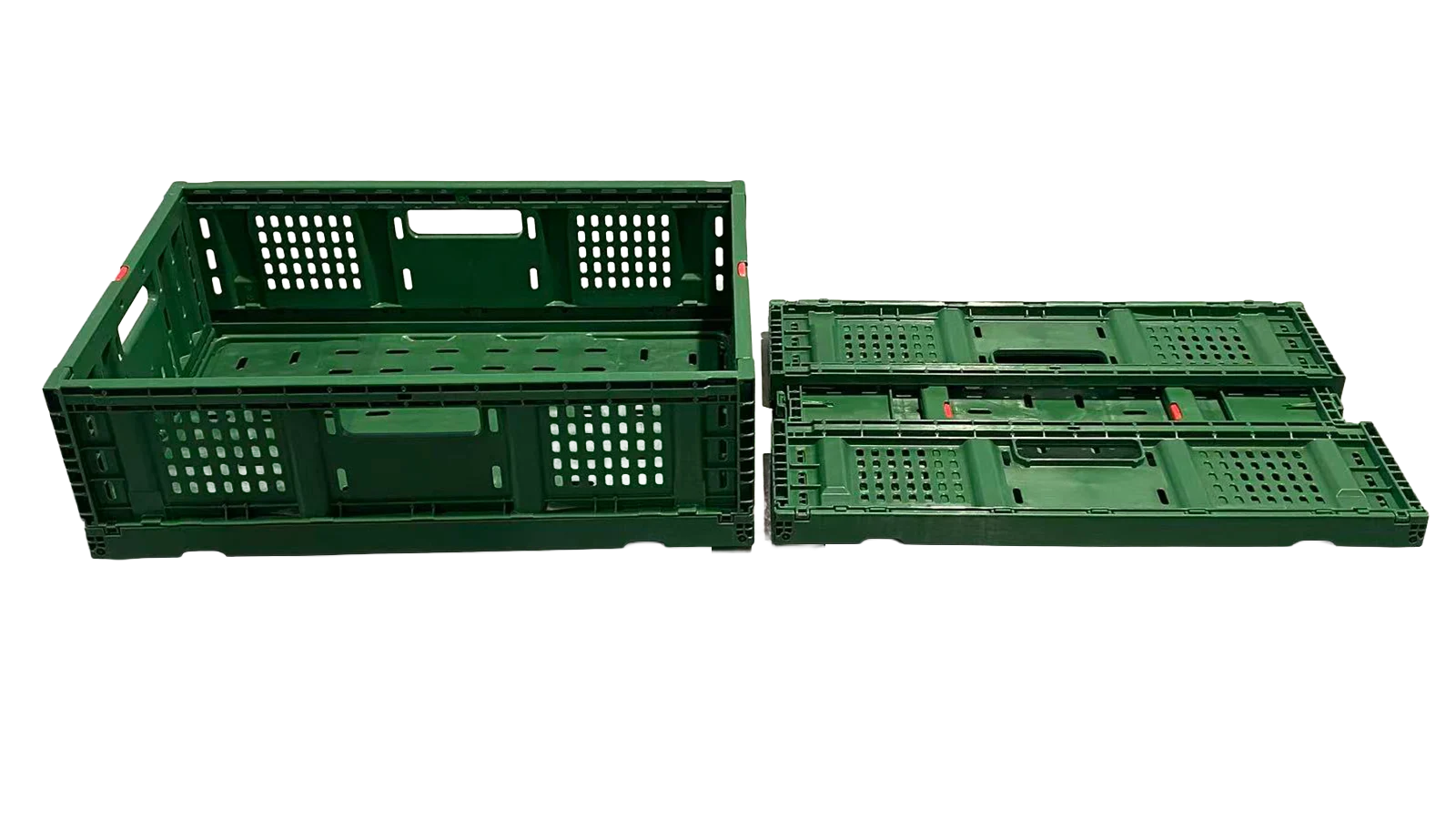
A collapsible crate changes that part of the cycle. Its side walls fold into the base, reducing the height of the empty unit. More empty crates may therefore fit within the same vertical envelope during staging, storage or return transport. The design is most relevant in closed-loop or managed return systems where crates repeatedly circulate between known locations.
The phrase “space saving” is not enough for a purchasing decision. Buyers should compare open height with folded height, then test the result against the actual pallet pattern, vehicle clearance, wrapping method and safe stacking rules.
A practical height-only example
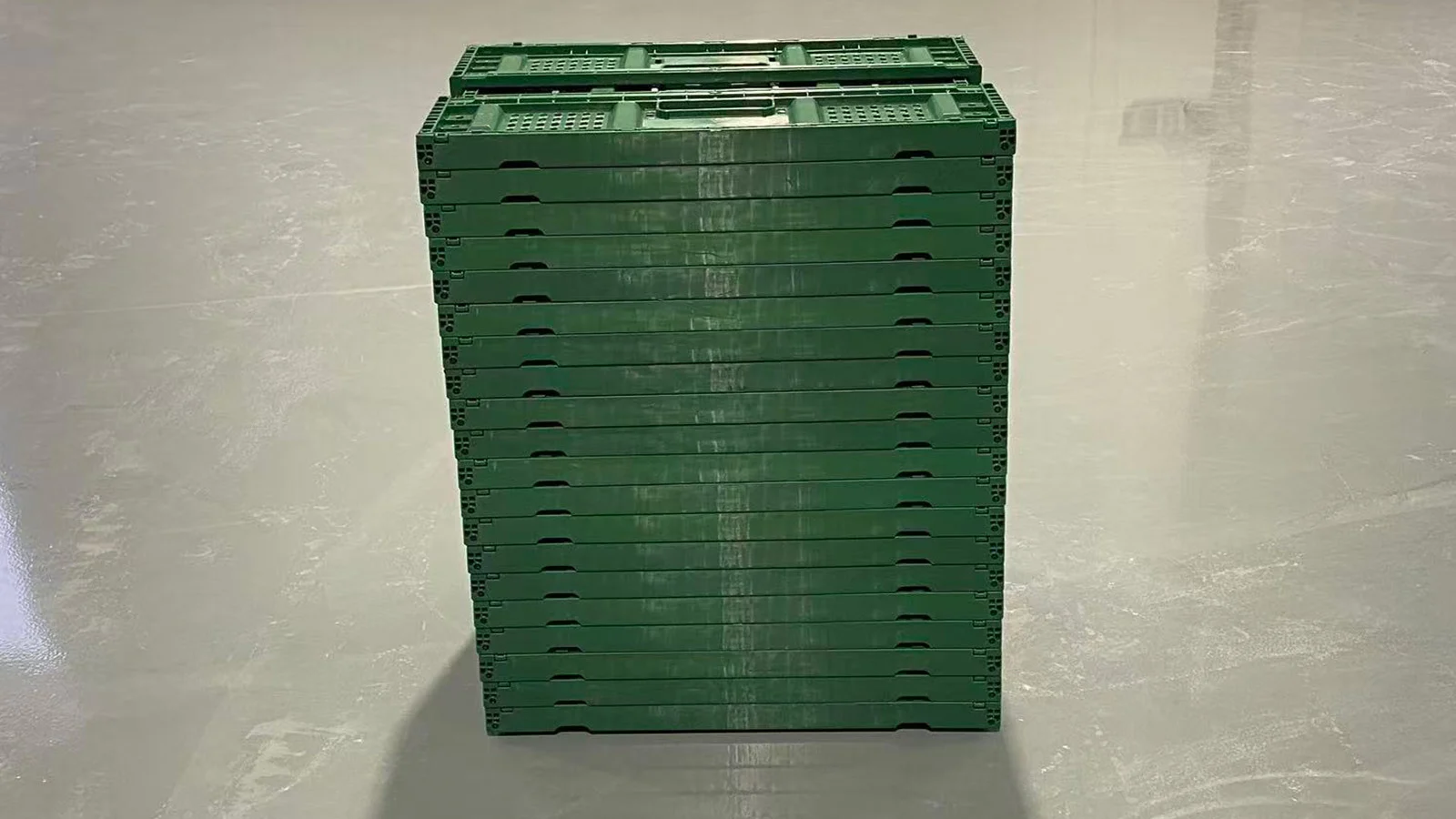
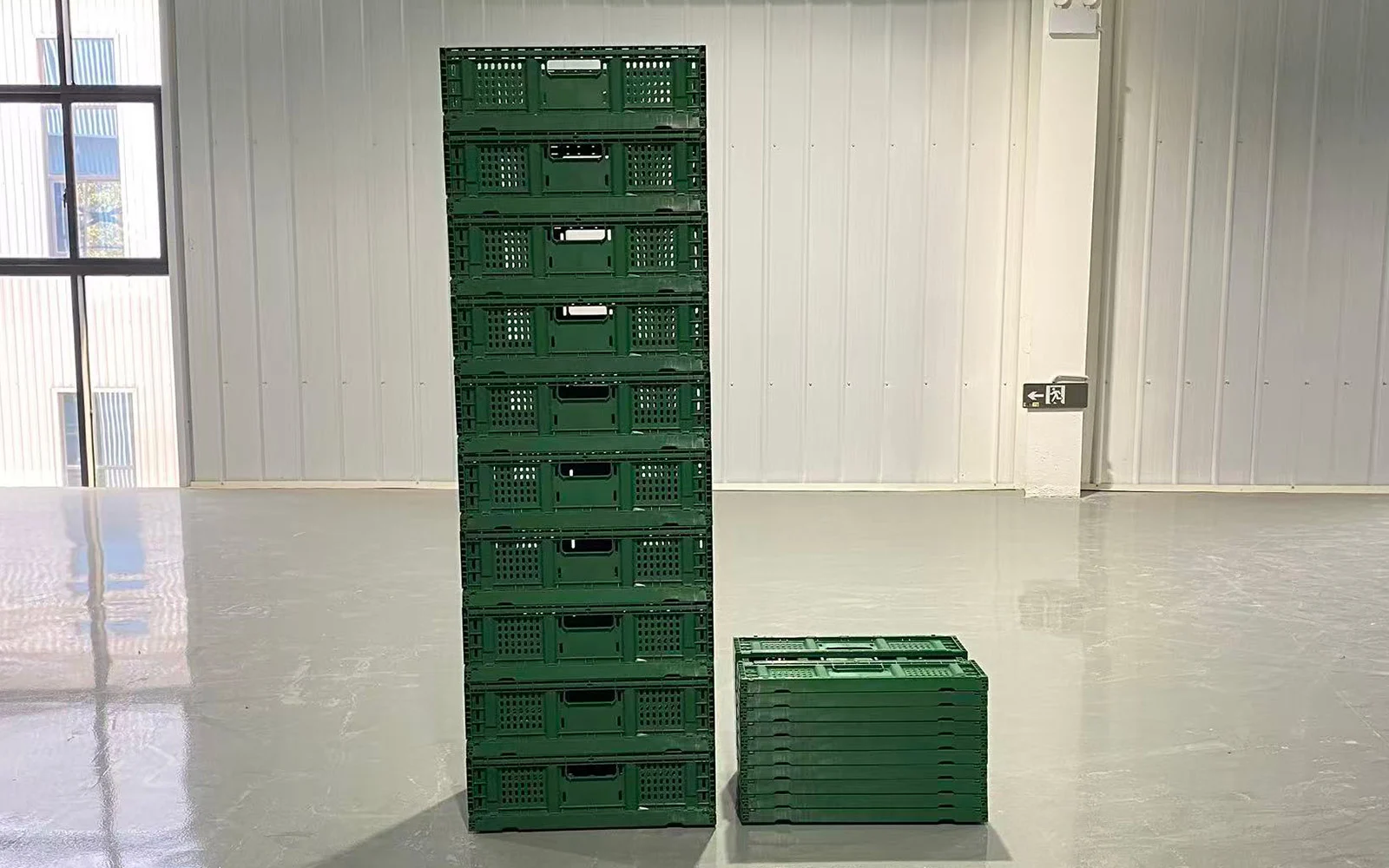
Consider one representative KEYUN ventilated collapsible crate. It has an external size of 600 × 400 × 195 mm and a folded height of 48 mm. The calculation below isolates height so that the effect is easy to understand.
| Measure | Open | Folded | Difference |
|---|---|---|---|
| Height per crate | 195 mm | 48 mm | 147 mm lower |
| Height of 10 empty crates* | 1,950 mm | 480 mm | 1,470 mm lower |
| Relative height | 100% | 24.6% | 75.4% reduction |
*Calculated as individual crate height × 10. Actual stack height may differ due to stacking engagement and should be measured.
Height ratio: 195 ÷ 48 = 4.06. In a purely height-based comparison, the same vertical space used by 10 open crates could hold approximately 40 folded crates. This is a planning estimate, not a guaranteed truck-loading result.
Do not translate the 75.4% height reduction directly into a 75.4% freight-cost reduction. Actual savings depend on pallet footprints, stack limits, aisle and vehicle constraints, labour, route distance, backhaul availability and the number of crates that return on each trip.
What the crate still has to do when open
Folding efficiency matters only if the crate also performs reliably in the loaded part of the cycle. The same representative ventilated crate uses a 600 × 400 mm footprint, brand-new polypropylene construction and a listed load of 30–35 kg. The usable internal dimensions are 565 × 365 × 180 mm and the unit weight is 1.75 kg.
| Specification | Value | Why it matters |
|---|---|---|
| External size | 600 × 400 × 195 mm | Checks fit with pallets, shelving, vehicles and handling equipment |
| Internal size | 565 × 365 × 180 mm | Defines the usable packing envelope |
| Folded size | 600 × 400 × 48 mm | Defines empty-return and storage height |
| Unit weight | 1.75 kg | Affects manual handling and total loaded weight |
| Listed load | 30–35 kg | Must be confirmed against the buyer’s load distribution and test conditions |
| Material | Brand-new PP | Grade, additives and required documents should be confirmed for the project |
| Structure | Ventilated and collapsible | Supports airflow and compact empty handling where the application allows |
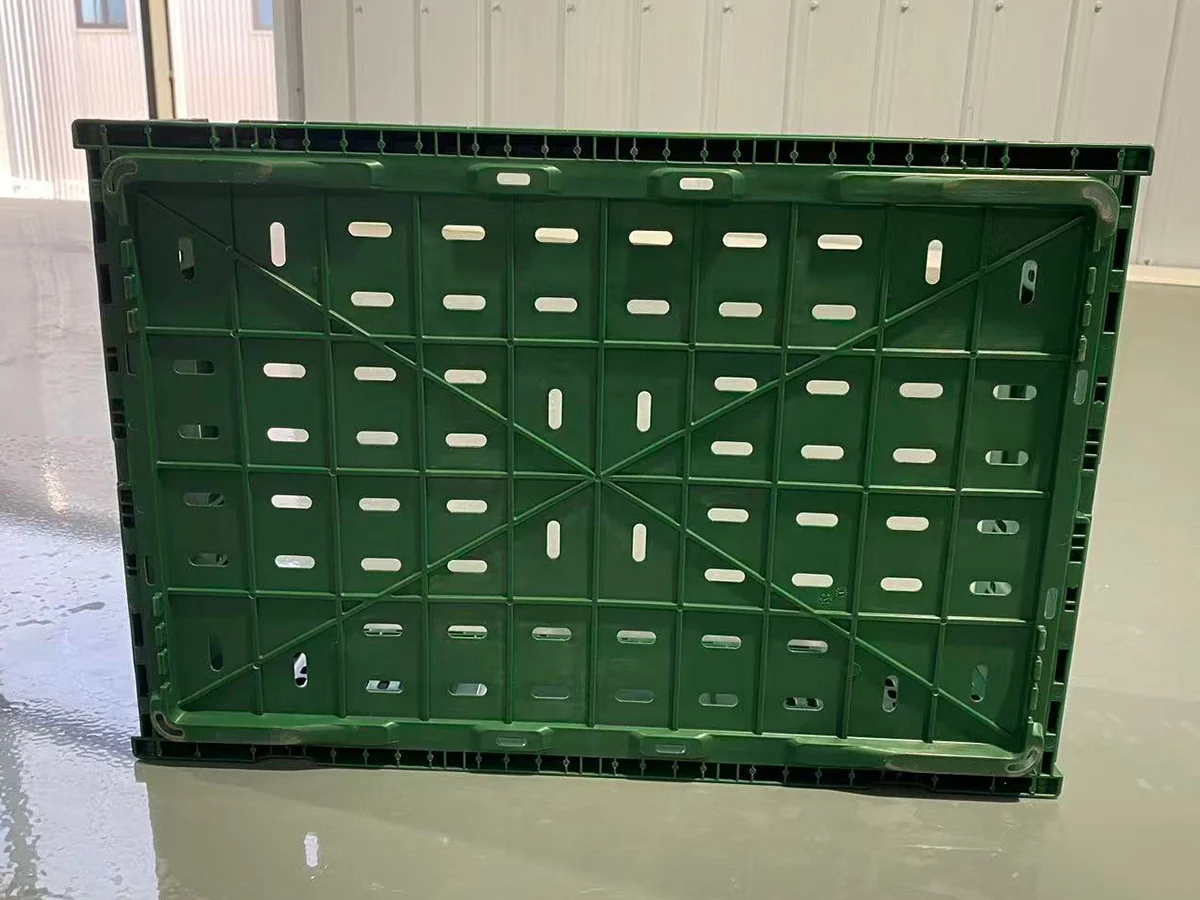
Typical applications include fruit and vegetable picking, sorting, conveyor transfer, distribution and supermarket display. Reinforced corners, dovetail-style joints and all-plastic pins are intended to support repeated handling. Tag or RFID options may be available when configured, but suitability must be confirmed for the exact project.
Five checks before adopting collapsible crates
1 Define the return loop
Map where the crate is filled, delivered, emptied, collected, cleaned, inspected and returned. Record who owns the crate at each stage. A reusable container is not a complete reuse system by itself; the return process, responsibilities and loss controls determine whether the asset actually circulates.
2 Measure the real logistics unit
Do not calculate from one crate alone. Build a pallet or trolley trial with the correct stack quantity, straps, wrap, labels and clearance. Compare the number of empty crates per pallet position and per vehicle, then include handling time and any additional equipment.
3 Test locks, hinges and stack behaviour
Workers should be able to erect and fold the crate consistently without pinching, incomplete locking or excessive force. Test the loaded crate with the real product and load distribution. Also check how the base and corners transfer stack loads and whether mixed batches remain compatible.
4 Match ventilation and cleaning to the product
Ventilated walls can support airflow and visible inspection for produce and other suitable goods, but openings may not suit every small, delicate or contamination-sensitive item. Define the washing method, water temperature, detergent, drying process and inspection standard before scaling the pool.
5 Plan asset identification and loss control
Colour coding, logos, labels, barcodes, tags or RFID can support ownership and tracking. Select the method according to the number of hand-off points, scan environment, data system and replacement cost. Tracking technology is useful only when teams consistently capture and act on the data.
Why returnable packaging is a current procurement topic
Reusable transport packaging is receiving greater attention because companies are examining packaging waste, repeated-use systems and the cost of reverse logistics. In the European Union, Regulation (EU) 2025/40 introduces reuse requirements for specified transport-packaging formats. Official 2026 guidance explains that, from 2030, at least 40% of relevant transport packaging used within the Union must be reusable packaging within a reuse system, subject to the regulation’s scope and exemptions.
This does not mean that purchasing a plastic crate alone proves compliance. Buyers operating in the EU should review the applicable role of the economic operator, reuse-system requirements, technical documentation, product use and any exemption with qualified advisers. The practical design questions remain the same: can the crate be collected, cleaned, inspected, tracked and returned for another cycle?
Collapsible or fixed-wall crate
| Decision factor | Collapsible crate | Fixed-wall crate |
|---|---|---|
| Empty return | Lower vertical profile after folding | Keeps its full height |
| Setup | Must be erected and locked correctly | Immediately ready to load |
| Moving parts | Joints and locks require inspection | Simpler wall structure |
| Storage | Compact when empty | May need nesting or more space |
| Best fit | Repeated return loops with meaningful empty movement | Fixed storage, no-return use or applications prioritising structural simplicity |
| Main validation | Fold ratio, lock durability, handling time and loaded performance | Load, wall, stack and nesting performance |
A collapsible crate is not automatically the better choice. If containers rarely return empty, remain loaded for long periods or face unusually demanding loads, a fixed-wall crate may be simpler. The correct comparison is total system cost and operational fit, not unit price alone.
Run a controlled pilot before a full rollout
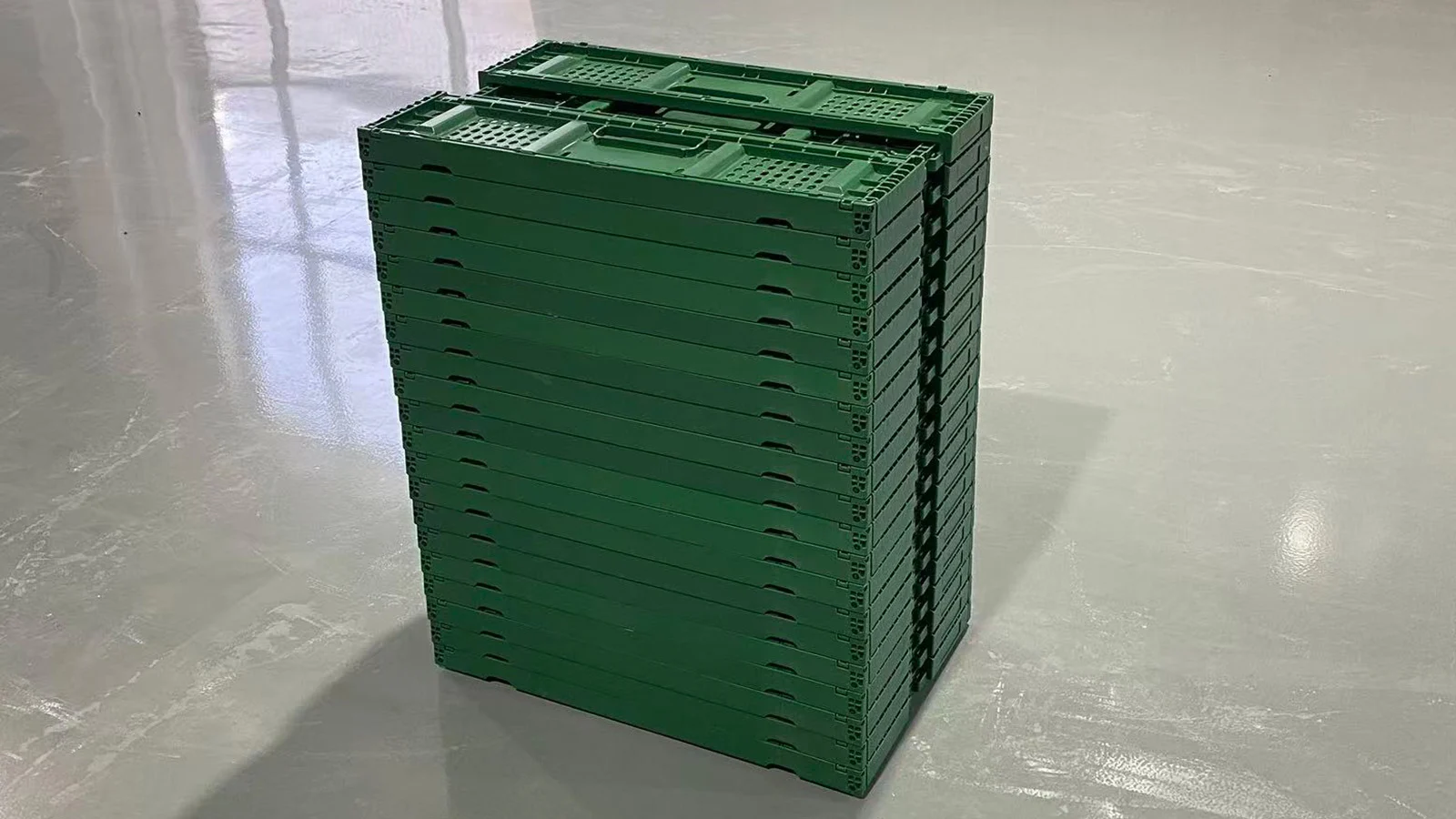
A pilot converts assumptions into site-specific evidence. Select one route, one product family and a manageable number of crates. Train the operators and record the same measures for both the current packaging and the trial crate.
- Empty crates per pallet, trolley or vehicle position
- Time to erect, fold, stack and unload each crate
- Product damage, crate damage and lock failures
- Cleaning time, drying time and rejection rate
- Number of completed reuse cycles
- Lost or unreturned crates
- Cost per completed delivery cycle, including return handling
Use the pilot data to estimate the payback period under several route volumes and crate-loss scenarios. If transport rates or labour costs change, update the model rather than relying on a one-time saving estimate.
Questions buyers often ask
How much space can a collapsible plastic crate save
Calculate the percentage from the actual open and folded heights. In the example above, the height reduction is 75.4%. Practical storage or transport improvement will be lower or different if stack limits, pallets, wrapping and vehicle clearances control the load.
Are collapsible crates suitable for fresh produce
Ventilated collapsible crates are commonly evaluated for fruit and vegetable picking, sorting and distribution. The buyer should still confirm dimensions, airflow, product contact requirements, cleaning procedures, temperature conditions and load performance for the specific produce and route.
Can colours, logos or tracking features be customised
Colour, logo, label, tag or RFID configurations may be available. The final method depends on order requirements, mould and marking options, scan environment and the information the customer needs to manage.
What information should be included in an RFQ
Provide the product type, item dimensions, unit weight, target load, route, temperature, pallet or conveyor requirements, cleaning method, expected annual quantity and desired colour or identification method. These details allow a supplier to recommend a closer-fit crate and define the tests or documents that require confirmation.
Build the business case around the full loop
Collapsible plastic crates are most valuable when the loaded trip and the empty return are designed as one system. Start with measured dimensions, calculate the theoretical reduction, then validate the crate in the real route. A sound decision combines folding efficiency with loaded performance, handling time, cleaning, tracking, loss rate and expected reuse cycles.
KEYUN supports overseas buyers with product selection, specification coordination, customisation discussions and export communication, with manufacturing and R&D support from Hebei Quanyun. Share your product, route and handling requirements to request a crate and return-logistics evaluation.