Evaluating plastic pallets vs wooden pallets is a strategic capital decision for warehouse operators, food processors, and agricultural exporters across South Africa. Whether you manage a high-bay fast-moving consumer goods (FMCG) distribution center in Gauteng, operate a citrus and subtropical fruit packhouse in Limpopo or the Western Cape, or coordinate cross-border SADC road freight into Namibia, Botswana, and Zimbabwe, your pallet pool directly determines your racking safety, cold-room hygiene, and export customs clearance speed.
For decades, pine timber pallets were treated as the default low-cost option in Southern African supply chains. Yet frequent plank breakage, protruding nails that puncture secondary packaging, moisture weight fluctuations, and recurring ISPM-15 fumigation fees quickly erode that upfront price gap. Today, procurement teams are transitioning to heavy-duty injection-molded platforms from KEYUN Reusable Plastic Pallets engineered for 5-to-10-year circulation loops. This guide compares total cost of ownership, 1200 × 1000 mm South African dimensional standards, steel-reinforced racking capacities, and resin selection so you can specify the right pallet for your facility.
1. Plastic Pallets vs Wooden Pallets: 6-Point Technical & Financial Comparison
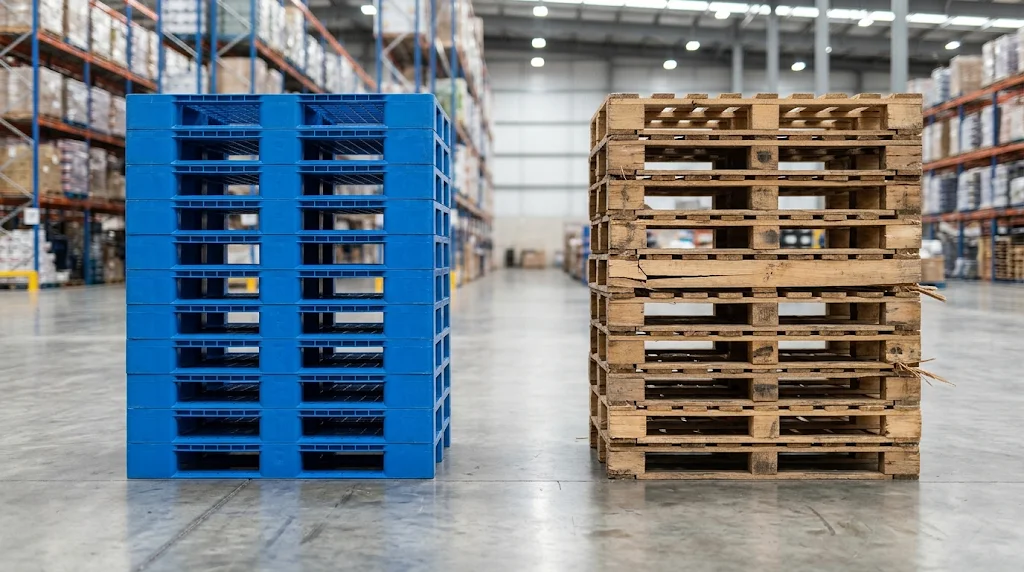
When supply chain directors analyze plastic pallets vs wooden pallets, comparing the initial factory invoice tells less than half the story. In high-velocity B2B distribution, operational cost per trip is governed by service lifespan, repair downtime, and cargo damage:
| Evaluation Metric | Timber / Wooden Pallets (1200 × 1000 mm) | KEYUN Reusable Plastic Pallets (1200 × 1000 mm) | B2B Operational Impact for South Africa |
|---|---|---|---|
| Average Service Lifespan | 15 to 30 trips before board splitting or nail failure | 200 to 500+ trips (5–10 years in closed-loop pools) | Eliminates continuous pallet repair labor and replacement purchasing |
| ISPM-15 Export Compliance | Mandatory heat treatment (HT) or fumigation + IPPC stamp | 100% Exempt from ISPM-15 regulations worldwide | Zero quarantine delays at Durban/Cape Town ports or SADC land borders |
| Moisture & Tare Weight | Absorbs rain and cold-store condensation (18–28 kg variable) | Non-absorbent hydrophobic polymer (consistent tare weight) | Accurate automated check-weighing and lower road freight fuel burn |
| Hygiene & Contamination | Harbors mold, wood-boring pests, splinters, and rusty nails | Washable, chemical-resistant, splinter-free surface | Passes strict PPECB cold-chain and HACCP food/pharma audits |
| Compatibility With Crates | Uneven deck slats damage plastic crate bases | Precision flat or grid deck interlocks with 600×400mm crates | Protects collapsible plastic crates and attached lid containers |
| End-of-Life Residual Value | Scrapped as timber waste or low-value firewood | 100% recyclable thermoplastic with trade-in scrap value | Recovers capital at end of service life and supports corporate ESG targets |
For companies sourcing plastic pallets south africa, the elimination of timber repair yards, splinter injuries, and torn shrink-wrap alone typically delivers a complete return on investment within 12 to 18 months of circulation—making the long-term financial case for plastic pallets vs wooden pallets clear for high-turnover South African distribution centers.
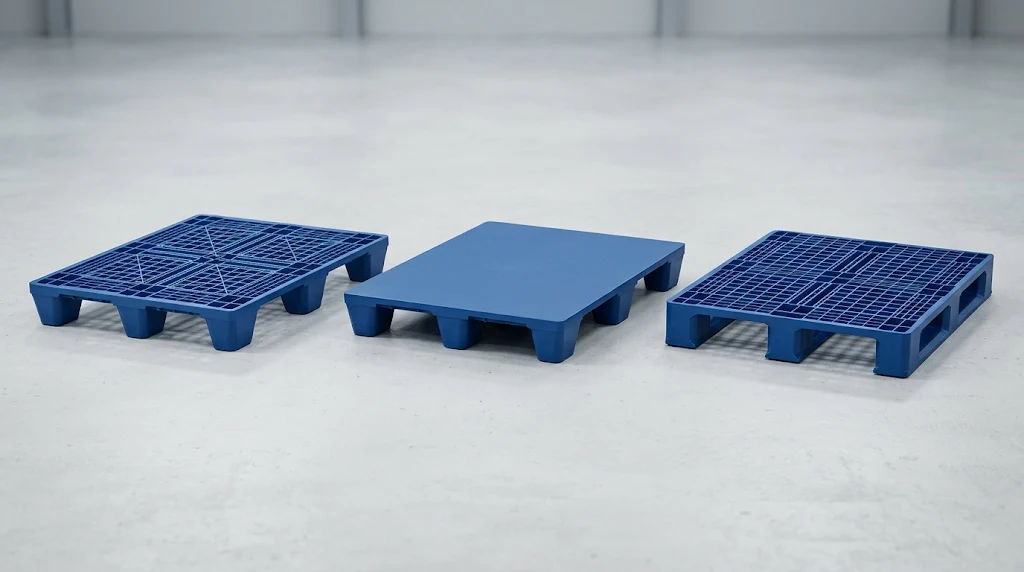
2. Choosing the Right Structure: Nine-Leg Grid, Nine-Leg Flat-Deck & Three-Runner Pallets
A common specification error when comparing plastic pallets vs wooden pallets is ordering a lightweight nestable pallet for an unsupported warehouse beam rack. At KEYUN Reusable Plastic Logistics Solutions, we manufacture three core structural configurations tailored to specific material handling stages:
- Nine-Leg Grid Plastic Pallets (Nestable / Light-to-Medium Duty): Engineered with a ventilated open-grid deck and nine hollow support feet, these pallets allow four-way entry for both forklifts and manual hand pallet jacks. Because the hollow legs nest when empty (or stack compactly), they reduce empty storage space and lower per-unit cost for one-way sea exports, agricultural field staging, and retail floor displays.
- Nine-Leg Flat-Deck Plastic Pallets (Hygienic Smooth Surface): Featuring a smooth, enclosed top deck without deep crevices, flat-deck nine-leg pallets prevent point-load indentation on bagged ingredients (flour, sugar, cement, chemicals) and corrugated cartons. The sealed surface wipes clean in seconds, making it ideal for meat processing plants, dairy cold rooms, and pharmaceutical cleanrooms.
- Three-Runner Plastic Pallets (Heavy-Duty Racking & Conveyors): Built with three continuous bottom skids (runners) along the length of the pallet, this profile replicates the footprint stability of a perimeter-base pallet while maintaining full compatibility with automated roller conveyors, stacker cranes, and selective warehouse beam racking.
3. Static, Dynamic, and Racking Load Specs: Why Steel Reinforcement Matters
In engineering procurement, every plastic pallet carries three distinct load ratings that must never be confused:
- Static Load Capacity (1,500 kg to 6,000 kg): The maximum weight a pallet can hold when resting completely flat on a solid warehouse floor (including multi-pallet floor stacking).
- Dynamic Load Capacity (1,000 kg to 2,000 kg): The maximum evenly distributed payload while the pallet is lifted and moved by a forklift or powered pallet truck.
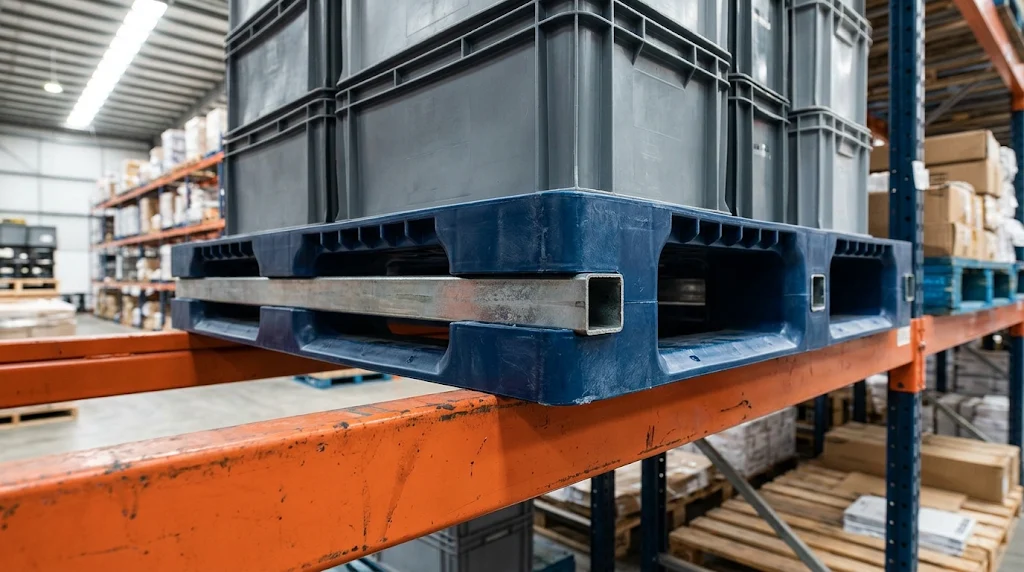
- Racking Load Capacity (600 kg to 1,500+ kg): The maximum payload when the pallet is supported only at its two outer edges across open selective warehouse racking beams (1,000 mm clear span).
When storing heavy palletized goods in high-bay distribution centers in Johannesburg, Centurion, or Durban, unreinforced polymers can experience gradual creep deflection (sagging) under sustained beam loads. Specifying steel reinforced racking plastic pallets solves this mechanical limitation. By inserting 4 to 8 galvanized internal steel square tubes into dedicated channels inside the pallet deck and bottom runners, KEYUN increases structural stiffness and keeps beam deflection under strict safety tolerances (<15–20 mm) for heavy 1,000 kg to 1,500 kg racking loads. Because the steel bars are sealed inside the plastic structure, they remain protected from moisture and rust during high-pressure washing. When warehouse safety engineers evaluate **plastic pallets vs wooden pallets** for overhead beam racking, this internal steel-tube reinforcement eliminates the risk of sudden timber slat fracture at 8-to-12-meter storage heights.
4. HDPE vs PP Plastic Pallets & South Africa’s 1200x1000mm Modular Standard
Selecting the right polymer resin and footprint is critical when transitioning from plastic pallets vs wooden pallets in Southern Africa’s diverse climate zones:
HDPE vs PP Plastic Pallets: Matching Resin to Operating Temperature
Understanding hdpe vs pp plastic pallets ensures your pallets do not crack in blast freezers or flex excessively in warm ambient warehouses:
- High-Density Polyethylene (HDPE): Virgin HDPE offers superior low-temperature impact absorption, remaining tough and ductile in chilled packhouses and deep-freeze cold storage (-20°C to -30°C). It is the first choice for South African fruit exporters, seafood processors, and cold-chain 3PL operators audited under PPECB cold-chain management guidelines.
- Polypropylene (PP): Virgin PP provides higher flexural modulus (stiffness) and performs exceptionally well in warm ambient manufacturing plants, automotive assembly lines, and indoor selective racking at normal room temperatures.
Perfect Modular Fit on 1200x1000mm Plastic Pallets
As documented by the Consumer Goods Council of South Africa (CGCSA), the Cold Chain South Africa pallet standard, and the FAO reusable packaging manual, South Africa’s domestic supply chain operates predominantly on 1200 × 1000 mm pallets, while European export lanes use 1200 × 800 mm Euro pallets.
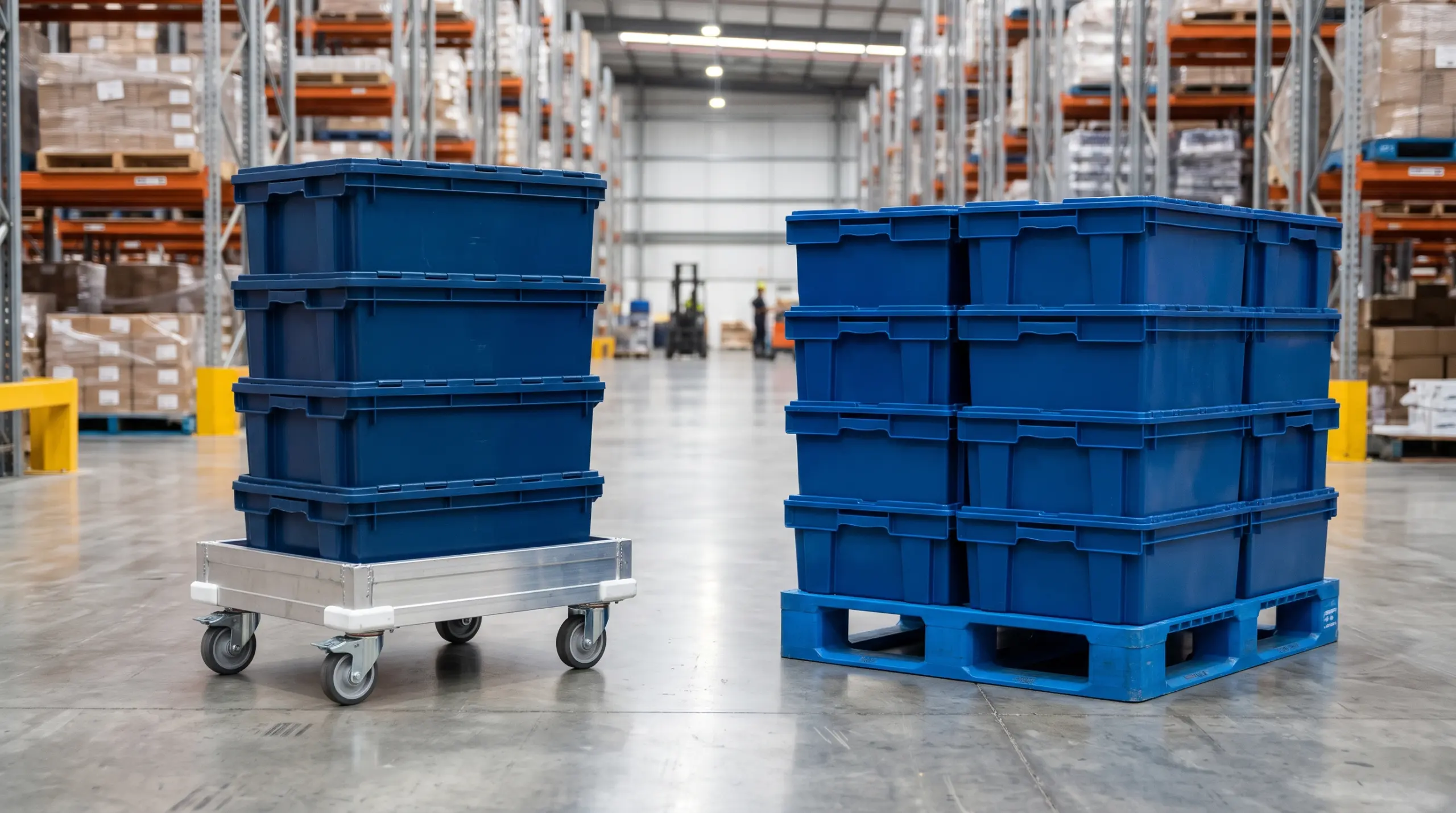
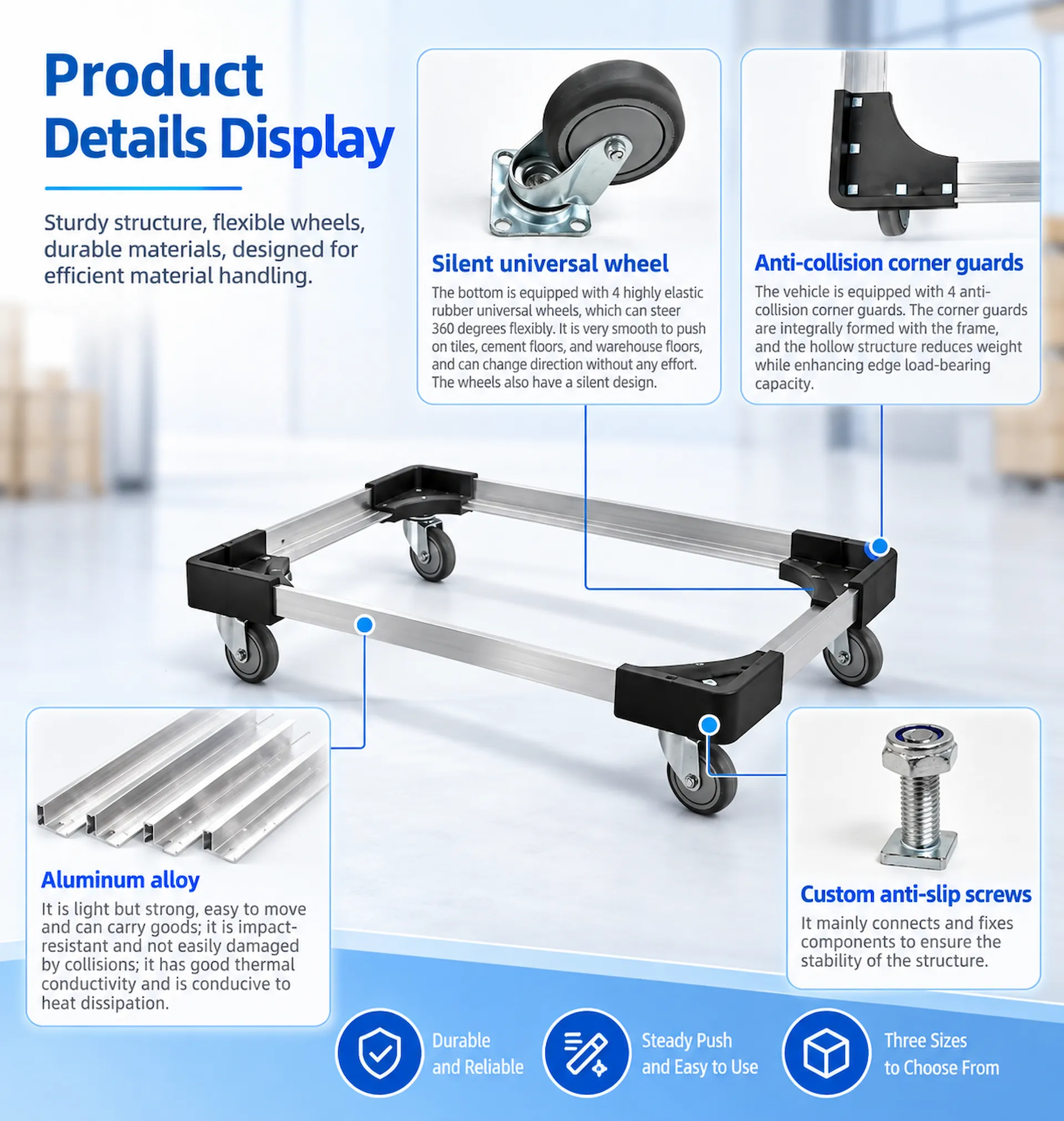
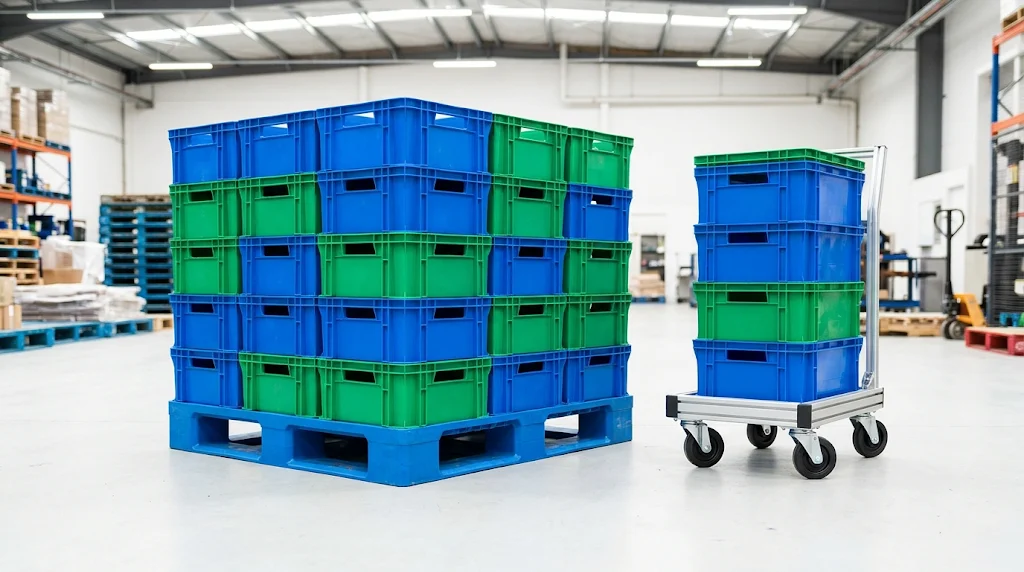
KEYUN supplies 1200x1000mm plastic pallets alongside 1200 × 800 mm, 1200 × 1200 mm, and 1100 × 1100 mm models. On a 1200 × 1000 mm pallet deck, five of our 600 × 400 mm TY6040195W-S Collapsible Plastic Crates or CX6040225C Attached Lid Containers interlock per layer (3 × 400 mm + 2 × 600 mm = 100% surface coverage), while ten compact KS403024W 400×300mm Folding Crates fit flush per layer. For short-distance floor picking without forklifts, operations also pair these containers with KEYUN Aluminum Crate Dollies.
5. Sea Freight Container Loading & Consolidated Export Procurement from China
When importing 1200x1000mm plastic pallets to Port of Durban, Port of Cape Town, or Port of Ngqura/Gqeberha, container cube optimization directly dictates your landed ZAR unit price:
- Nestable Nine-Leg Pallets: Because the tapered legs nest inside one another, a 40ft High Cube (40HQ) container can accommodate roughly 800 to 1,100+ nested units, cutting ocean freight cost per pallet by over 50% compared to non-nesting designs.
- Three-Runner Racking Pallets: A 40HQ container accommodates two side-by-side stacks of 1200 × 1000 mm pallets (1,200 mm + 1,000 mm = 2,200 mm across the 2,350 mm container width), holding approximately 360 to 440 heavy-duty racking pallets per container.
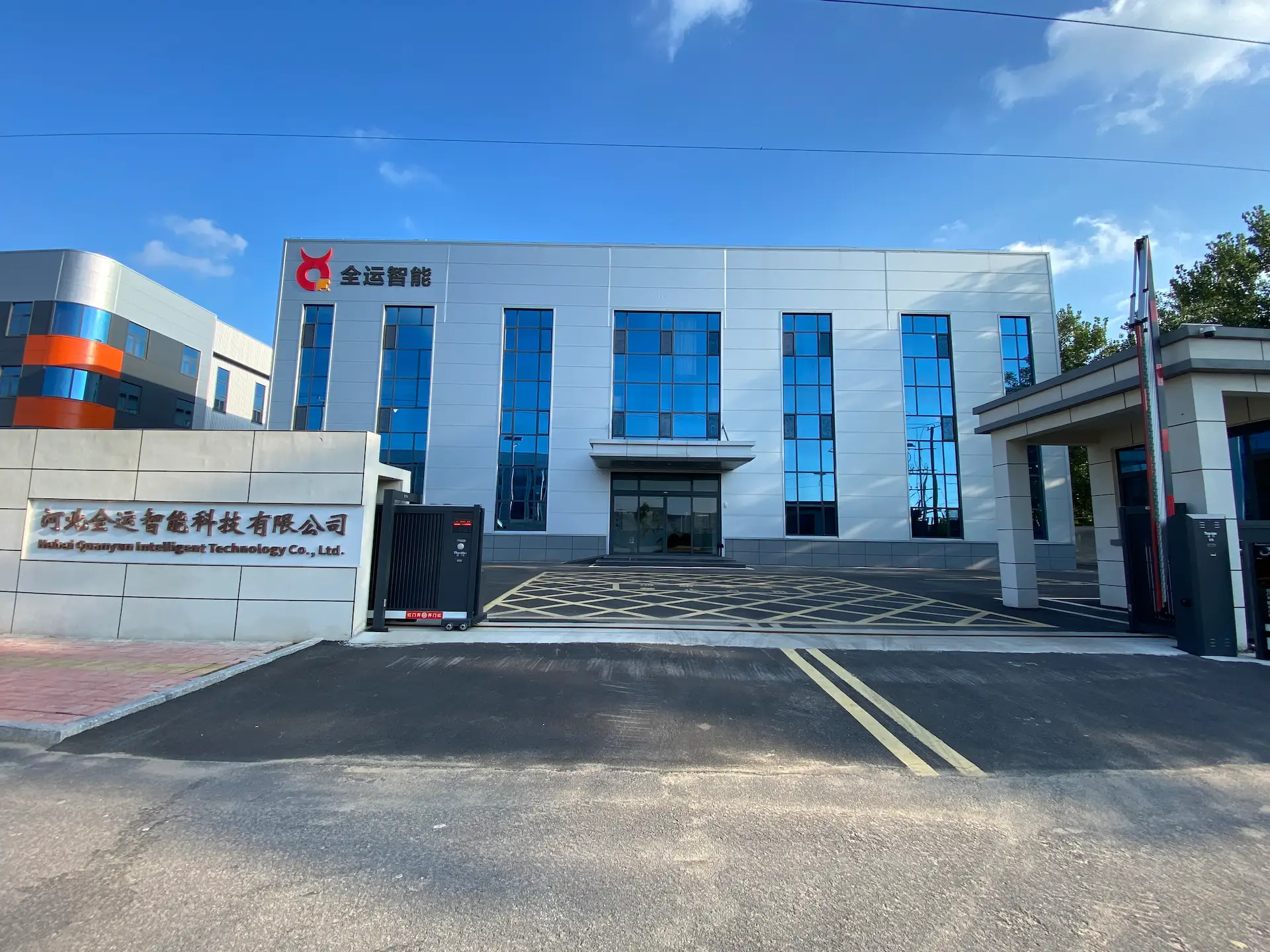
- Zero Empty Space via Consolidated Crate + Pallet Loading: Backed by Hebei Quanyun Intelligent Technology’s manufacturing base, KEYUN helps South African importers eliminate dead air inside ocean containers by loading folded reusable plastic crates for return logistics, nested attached lid totes, and aluminum crate dollies on top of or alongside your pallet stacks—further improving the landed import economics of **plastic pallets vs wooden pallets** for commercial buyers in Johannesburg, Cape Town, and Durban.
Watch KEYUN’s Factory Production Line: See how our automated injection-molding machines and assembly team produce and stack virgin polypropylene green folding plastic crates for B2B export.
6. Frequently Asked Questions (FAQ)
What information do I need to get an accurate plastic pallet quotation?
Please share your required footprint (1200 × 1000 mm or 1200 × 800 mm), deck style (grid vs flat top), base configuration (nine-leg vs three-runner), target static/dynamic/racking loads, operating temperature, and order quantity. Check our FAQ and Ordering Guide for complete export checklist details.
Do KEYUN plastic pallets support anti-slip grommets and RFID tracking?
Yes. For smooth loads or automated conveyors, our plastic pallets south africa export models can be configured with elastomer anti-slip plugs on the top deck and underside runners, custom corporate colors, hot-stamped logos, and dedicated slots for UHF RFID tracking tags.
How do plastic pallets vs wooden pallets compare for SADC cross-border trucking?
Timber pallets require intact ISPM-15 heat-treatment stamps; a single replaced uncertified board can cause a truckload to be detained at border posts into Namibia, Botswana, or Zimbabwe. Plastic pallets are permanently exempt from ISPM-15 phytosanitary inspections.
Request a Custom B2B Quotation & Container Plan from KEYUN (CTA)
Ready to upgrade your warehouse from broken timber and evaluate plastic pallets vs wooden pallets with factory-direct pricing? Contact KEYUN’s B2B Export Engineering Team Today or browse our complete Reusable Plastic Logistics Products Catalogue to request a technical datasheet, racking load recommendation, and container loading plan. Send your target footprint, load specs, quantity, and South African destination port to [email protected] or WhatsApp +86 180 3871 4440 for a tailored export quotation within 24 hours.