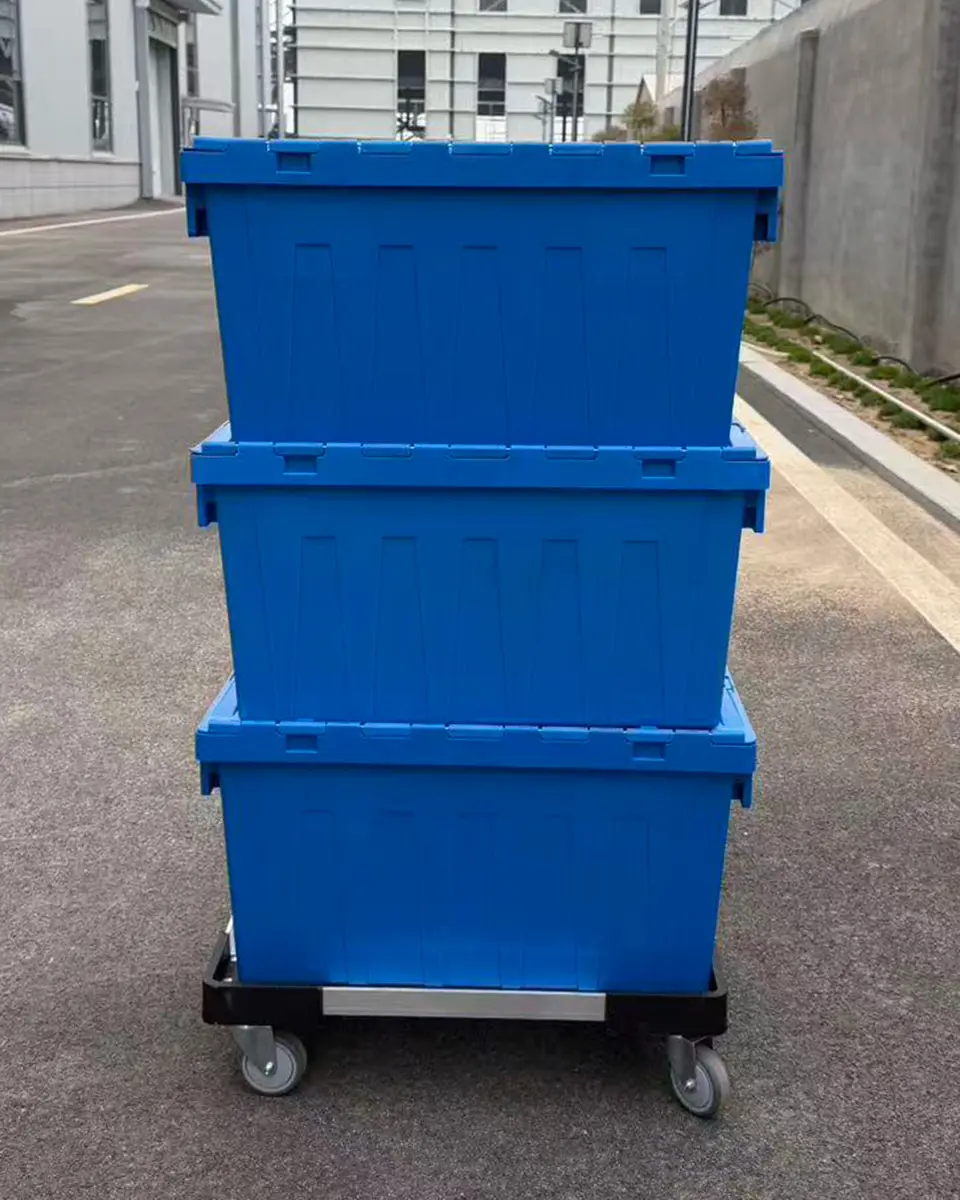
A crate dolly is a low wheeled base designed to support a compatible plastic crate or a controlled stack of crates so operators can move them across a level work area without carrying each container by hand. Unlike a general-purpose cart with a large deck, a matched crate dolly uses an open or framed footprint that locates the container at its base. The crate sits on top of the dolly and is retained by the frame or corner geometry.
Crate dollies are used in internal logistics where goods move repeatedly between receiving, storage, picking, production, packing, retail replenishment or dispatch. They can improve flow when the container system, floor, casters, load and operator method are selected together.
A dolly is not automatically suitable simply because the crate appears to fit. Dimensional compatibility, stability, caster behavior and the complete stacked load must be verified.
How a Crate Dolly Works
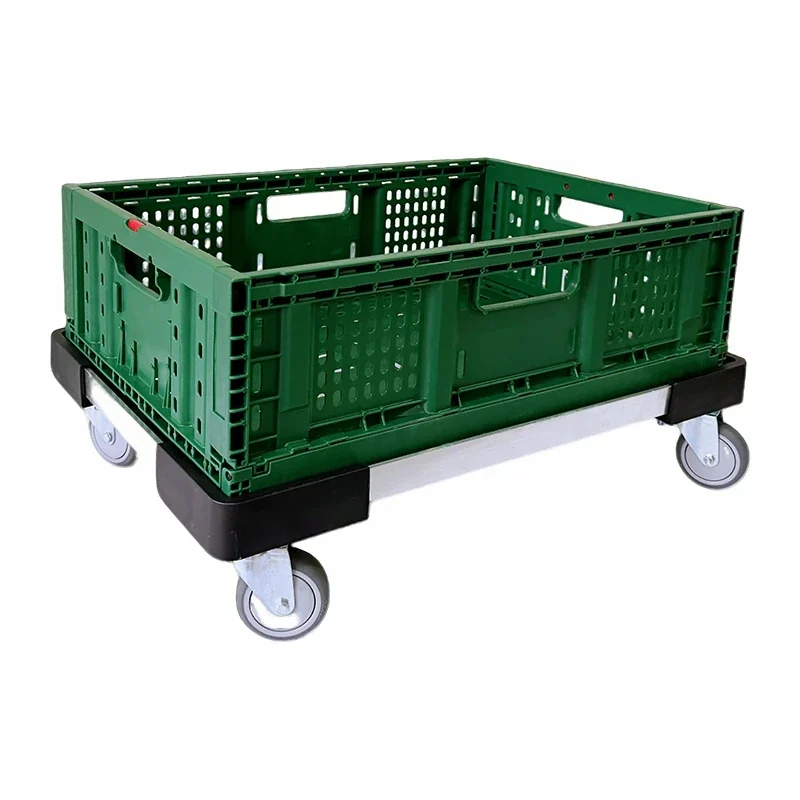
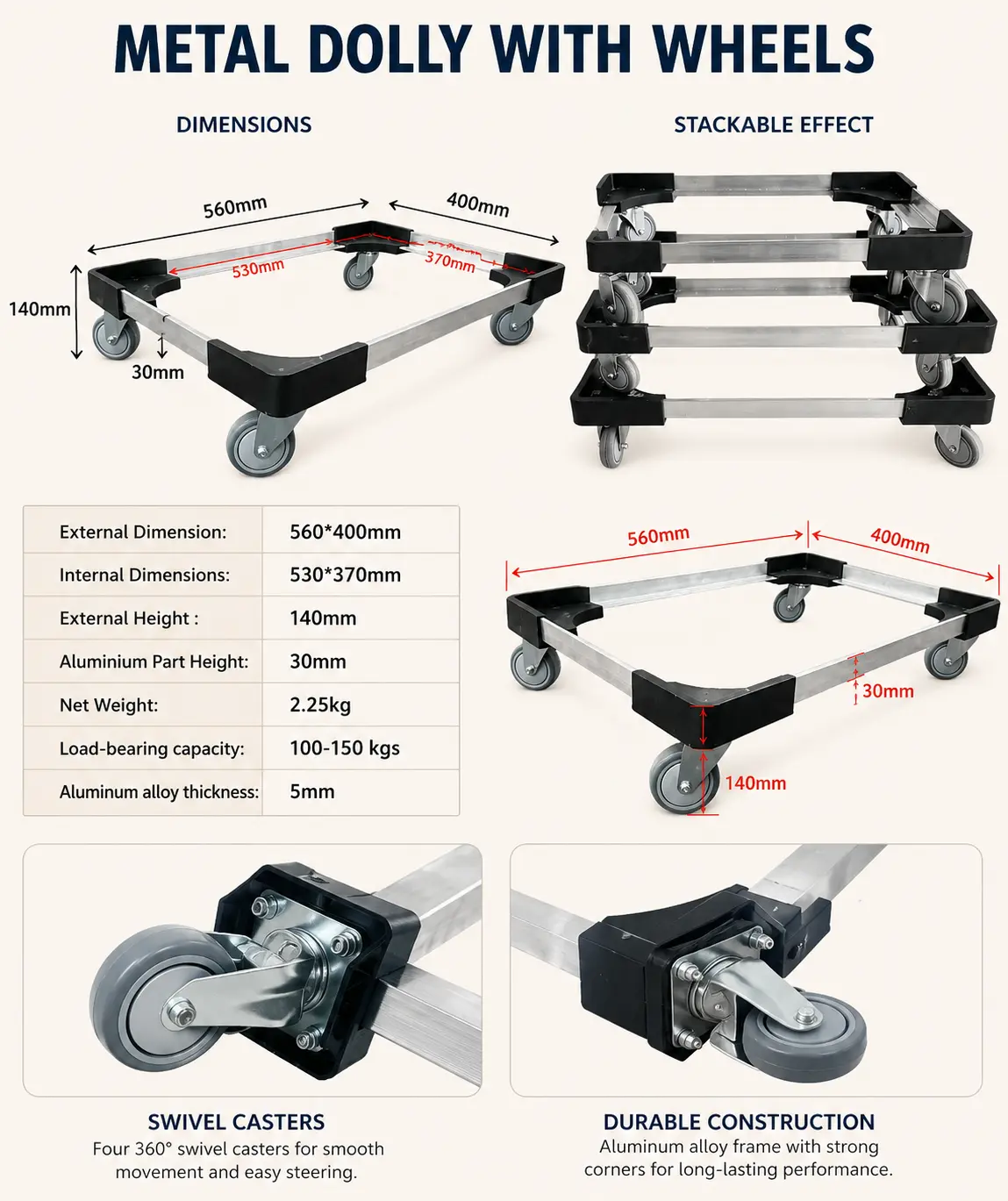
The dolly frame supports the bottom perimeter or designated contact points of the crate. Four casters allow movement and steering. In a matched system, the frame’s internal opening and corner profiles align with the crate footprint so the container sits consistently and resists sliding during normal movement.
Additional compatible crates may be stacked above the first crate when the container system, load and handling method allow it.
The operator starts, steers and stops the load manually or with an approved handle or towing arrangement if the model is designed for one. For short internal transfers, the dolly can reduce repeated lifting.
It also creates a mobile staging unit: a group of crates can wait near a production line, picking zone or replenishment point and then move as one controlled batch.
Where Crate Dollies Are Used
- Warehouse picking and distribution: Moving matched crates between storage, consolidation and packing areas.
- Manufacturing and line-side supply: Transferring parts or work-in-process between operations.
- Retail and supermarket replenishment: Moving stacked crates through back-of-house and stocking routes.
- Food and cold-chain operations: Where the dolly material, caster choice, cleaning process and environment have been confirmed.
- Internal collection and returns: Consolidating empty or loaded crates before the next logistics step.
Operational Benefits
Less Repeated Manual Carrying
Moving a group of crates on wheels can reduce the number of individual carry cycles. This does not remove the need for safe loading, unloading and push-force assessment, but it can reorganize the work so carrying is replaced by controlled rolling over suitable floors.
Faster Batch Movement and Staging
A compatible dolly allows crates to be grouped at the point of use and moved together. Production parts can be staged near a workstation, picked goods can be consolidated before packing, and retail loads can move from the back room toward the sales floor.
The value comes from reducing interruptions and unnecessary handoffs, not simply from adding wheels.
A Consistent Interface for a Crate System
When the same crate footprint and dolly frame are used across a defined loop, operators know where the container should sit and how the load should be moved.
This can simplify visual management and equipment allocation. Mixed crate footprints, improvised spacers or overhanging loads undermine that consistency.
What to Consider When Selecting a Crate Dolly
1. Crate Footprint and Locating Method
Measure the outside bottom footprint of the crate and identify the surfaces that are intended to contact the dolly. Compare these dimensions with the dolly’s internal opening, corner blocks and support rails.
The container should sit squarely without excessive movement, overhang or interference. If more than one crate model will be used, list every footprint and confirm compatibility separately.
2. Total Load — Not Only the First Crate
Calculate the total moved load: dolly weight, all crates, contents, inserts and any accessories. Also consider how the weight is distributed.
A tall stack with a high center of gravity behaves differently from a single low crate even at the same total weight. Obtain the exact model’s load guidance and do not substitute an unverified generic figure.
3. Caster Diameter, Material and Layout
Caster selection affects start force, rolling resistance, floor noise, steering, debris tolerance and performance at joints or thresholds.
The referenced KEYUN dolly family includes four-caster configurations, but the exact caster size, material, swivel arrangement and brake availability are model-specific.
Buyers should describe the floor, route, cleaning process and environmental conditions so the caster configuration can be reviewed.
4. Brakes, Slopes and Stopping Control
Determine where the dolly will wait, whether the floor is level and how the load will be secured during staging.
A brake may be useful in some operations, but it does not make an unsuitable slope safe. Confirm whether brakes are standard or optional for the model and how they are operated.
5. Route Width and Maneuvering Space
Walk the complete route. Measure doorways, aisle widths, corners, elevators, thresholds and work-cell clearances.
Check whether the operator pushes from behind, pulls from the front or uses a handle designed for the system. A dolly that turns easily when empty may require more space when carrying a tall stack.
6. Environment, Cleaning and Corrosion Exposure
The frame, fasteners and casters must suit the operating environment. Wet areas, cold rooms, food handling, outdoor transitions and frequent washdown create different requirements.
Confirm material construction, cleaning compatibility and maintenance instructions for the exact dolly.
7. Shipping, Assembly and Maintenance
Some dollies may be supplied disassembled. Clarify what assembly is required, how casters are secured and what inspection should be completed before use.
Establish a maintenance check for loose fasteners, damaged corner profiles, worn wheels, caster swivel, brake operation and frame distortion. Remove damaged units from service until assessed.
Common Procurement Mistakes
- Choosing a dolly from a top-view photo without checking the crate’s bottom footprint and contact surfaces.
- Using the weight of one crate instead of the complete stacked moving load.
- Ignoring the center of gravity, visibility and steering behavior of a tall stack.
- Selecting casters without considering floors, thresholds, noise, washdown or temperature.
- Assuming brakes, handles or towing features are standard without confirming the exact model.
A Practical Trial Before Rollout
- Confirm the exact crate footprint and place the real crate on the proposed dolly.
- Load the crate with representative goods and build only the intended approved stack.
- Move the load through the complete route, including corners, doors, joints and staging areas.
- Observe start force, steering, stopping, visibility, crate movement and operator posture.
- Check cleaning, parking, inspection, assembly and maintenance requirements.
- Document the approved crate–dolly combination so incompatible equipment is not mixed into the loop.
Frequently Asked Questions
Is a crate dolly the same as a platform trolley?
Not always. A crate dolly is typically a low wheeled base matched to a crate footprint and may have no handle. A platform trolley usually has a broader deck and often a push handle. Terminology varies, so confirm the structure and intended use rather than relying on the name.
Can several crates be stacked on one dolly?
A compatible stack may be possible, but the container model, total load, stack height, center of gravity, route and handling method must all be assessed. Follow model-specific guidance and validate the complete stack in a controlled trial.
How do I know whether my crate fits?
Compare the crate’s outside bottom footprint and contact geometry with the dolly’s internal frame and corner locations. The safest approach is to test the actual crate on a sample dolly and document the approved pairing.
Do crate dollies have brakes?
Brake availability depends on the model and caster configuration. Some configurations may use swivel casters without a standard brake, while brake options can be discussed for suitable projects. Confirm the exact specification before ordering.
Can the frame size be customized?
KEYUN supports discussions about custom frame sizes and related project requirements. Feasibility depends on the crate footprint, load, quantity, caster configuration and manufacturing review.
What should I send with an RFQ?
Send the crate drawing or measured bottom footprint, photos of the base, total intended load, stack height, route and floor details, doorway constraints, cleaning environment, caster or brake preferences and expected quantity. This allows compatibility to be reviewed before a sample trial.
Treat the Dolly and Crate as One Handling System
A crate dolly performs well when it is matched to the crate, load, route and operator method. Selecting the wheeled base separately from the container often creates fit or stability problems.
Define the approved combination, test it in the real route and maintain it as a single handling system.