The right plastic pallet is not determined by load weight alone. Buyers need to match the pallet to the complete handling route: floor storage, forklift movement, conveyors, warehouse racks, temperature, cleaning requirements and export conditions. A pallet that supports a heavy load on a flat floor may not be suitable when the same load is lifted or placed across rack beams.
This guide explains where plastic pallets are used, how static, dynamic and racking loads differ, when steel reinforcement may be needed and what information to confirm before ordering.
What Are Plastic Pallets Used For
Plastic pallets are reusable load platforms commonly produced from high-density polyethylene (HDPE) or polypropylene (PP). Injection moulding and blow moulding are the main processes in the current KEYUN product range. Their washable surfaces, consistent dimensions, resistance to moisture and resistance to many acids and alkalis make them suitable for operations that require repeatable handling and regular cleaning.
Typical applications include cold-chain logistics, food and pharmaceutical warehousing, automated storage, chemical and electronics operations, high-frequency return loops and cross-border shipping. The exact material grade, hygiene requirement and compliance documentation must still be confirmed for each application.
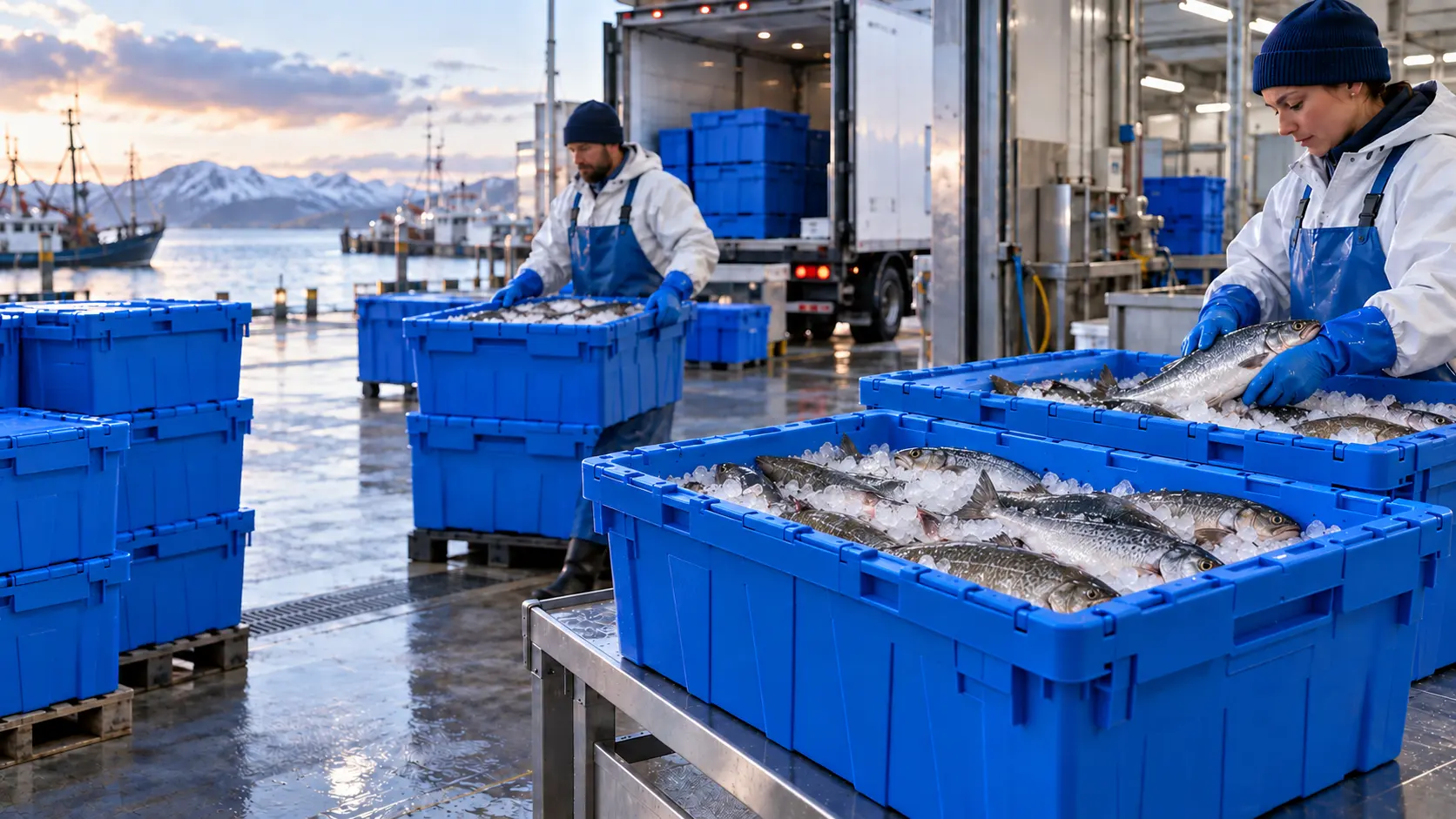
Seafood, meat and cold-chain operations: washable pallets for processing, cold rooms and distribution.
Fresh produce and supermarket distribution: reusable platforms for crates, cartons and retail replenishment.
Industrial parts and manufacturing: stable unit loads for components, work-in-process and finished goods.
Warehouses and distribution centres: forklift handling, conveyors, stacking and selected rack systems.
Chemical and electronics operations: moisture-resistant handling where the selected resin and pallet design suit the operating conditions.
Cross-border shipping: plastic pallets do not require the fumigation treatment used for wood packaging, although destination and customer requirements still need to be checked.
The two demonstrations examine different handling risks. The empty drop creates a severe impact after a long fall, while the loaded drop shows how the container responds when the contents add mass and internal force. The results should be read separately rather than treated as equivalent tests.
Understand Plastic Pallet Load Capacity Before You Buy
Plastic pallet load capacity is normally stated under three different support conditions. These figures cannot be substituted for one another.
| Load Rating | What It Means | Typical Operating Condition |
|---|---|---|
| Static Load | Maximum evenly distributed load while the pallet remains stationary on a level, rigid floor. | Floor storage and stationary stacking |
| Dynamic Load | Maximum evenly distributed load while the pallet is lifted, moved or transported using handling equipment. | Forklift, pallet jack and internal material handling |
| Racking Load | Maximum evenly distributed load supported while the pallet spans defined rack beams or another specified support arrangement. | Selective pallet racks, high-bay storage and other beam-supported systems |
Static load is generally higher because a rigid floor supports most of the pallet base. During forklift movement or racking, support is concentrated over smaller areas, so bending, impact and deflection become more important. Never select a rackable plastic pallet using only its static or dynamic rating.
KEYUN Product-Line Load Reference
| Pallet Category | Dynamic Load | Static Load | Racking Note |
|---|---|---|---|
| Light-Duty Reference | 500–600 kg | 1,000–2,000 kg | Confirm the exact model; this is not a default racking specification. |
| Standard Reference | 1,000 kg | 4,000–4,500 kg | Confirm the pallet structure, support conditions and model-specific load data. |
| Steel-Reinforced Reference | 1,500–2,000 kg | 4,000–6,000 kg | The product-line racking reference is approximately 1,000 kg under confirmed operating and support conditions. |
These figures are product-line reference ranges, not a universal guarantee for every pallet. Actual capacity depends on pallet size, base structure, material, steel-tube configuration, rack span, support direction, temperature, handling method and load distribution. Final ratings must be confirmed for the exact model and operating condition.
When Should a Plastic Pallet Be Reinforced with Steel Tubes
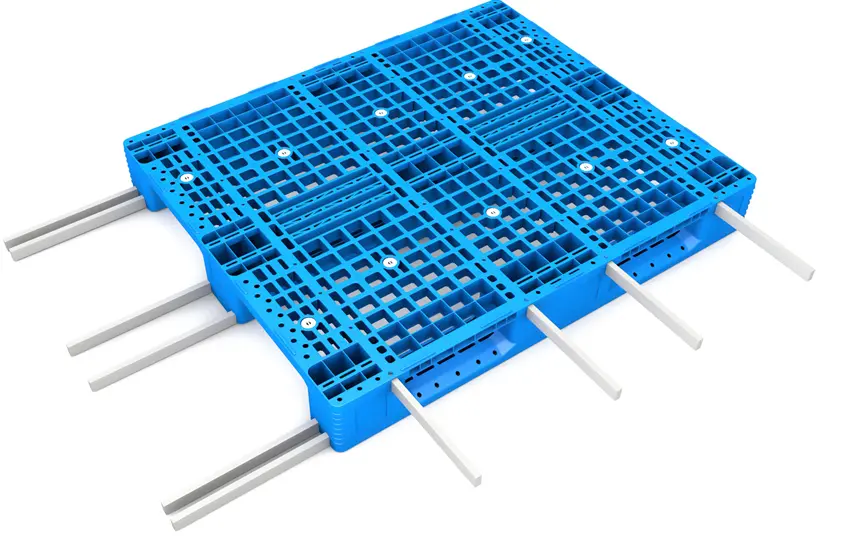
Steel reinforcement increases pallet rigidity and can reduce deflection under demanding loads. It is most relevant when a pallet will be stored on rack beams, used with heavier unit loads or exposed to repeated handling where structural stiffness is important.
The KEYUN training material lists configurations with eight to ten square steel tubes. Common examples use four tubes beneath the deck and either four or six tubes in the base. Referenced tube thicknesses are 1.2 mm and 1.5 mm. For rack applications in the current product line, three-runner pallets require steel reinforcement.
Adding steel does not create one standard load rating. Tube quantity, position, orientation, wall thickness and retention method must match the pallet mould and the support direction. Buyers should provide rack beam spacing, entry direction, maximum gross load and operating temperature before a reinforced pallet is recommended.
Choose the Correct Pallet Size
Start with the system the pallet must fit, not with the pallet alone. Check truck and container loading, warehouse racks, conveyor widths, forklift tine spacing, pallet-jack openings and the footprint of the packaged load.
| Pallet Size | Typical Market or Application |
|---|---|
| 1,200 × 800 mm | Common European footprint |
| 1,200 × 1,000 mm | Widely used industrial footprint |
| 1,219 × 1,016 mm / 48 × 40 in | Common North American footprint |
| 1,100 × 1,100 mm | Common Japanese footprint |
| 1,162 × 1,162 mm | Australian reference footprint |
| 1,200 × 1,200 mm | Square-format logistics applications |
Other product-line dimensions include 1,300 × 1,100 mm, 1,200 × 1,100 mm, 1,400 × 1,200 mm, 1,000 × 1,000 mm and 1,500 × 1,200 mm. Common heights are approximately 140–170 mm, while 120 mm and 125 mm options may be used for selected one-way export applications. Availability depends on the mould and pallet structure.
Select the Deck and Base Structure
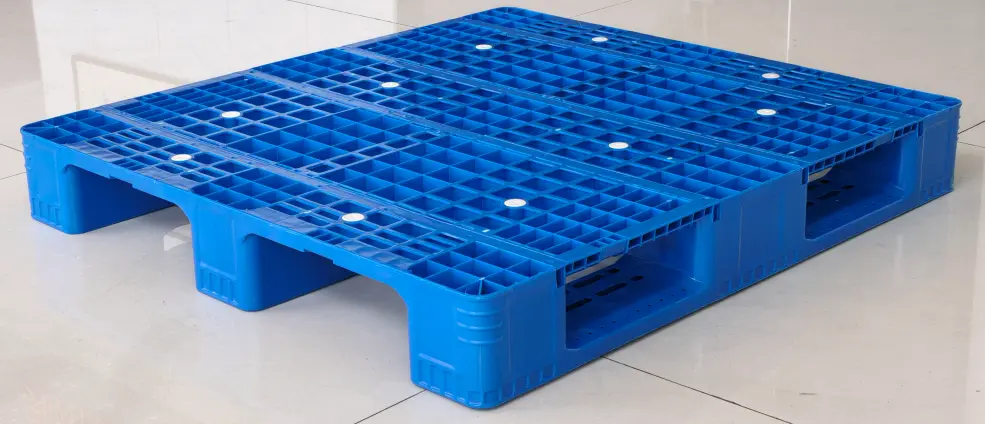
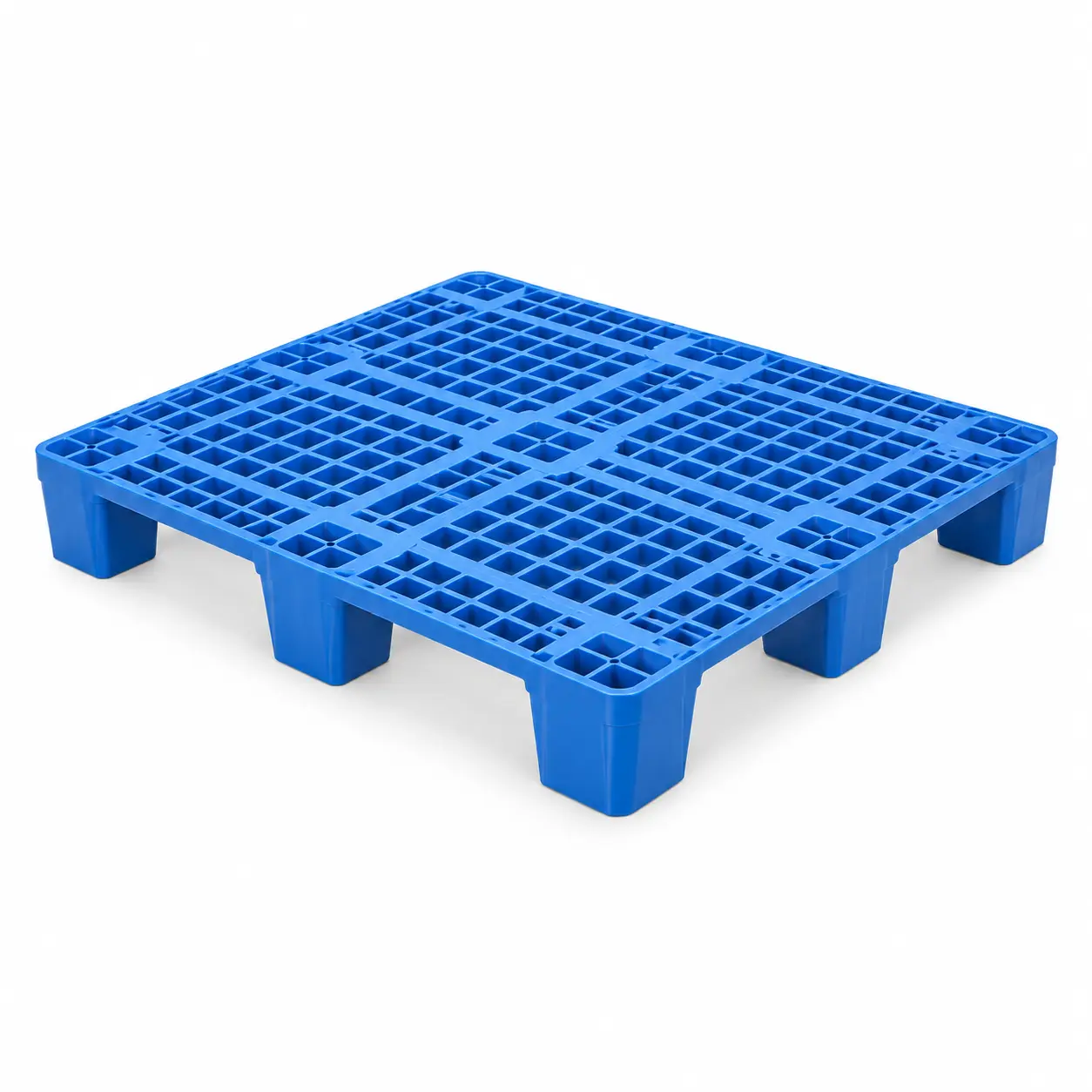
Deck and base design affect cleaning, weight, equipment compatibility, stacking and load support. KEYUN’s current product knowledge includes grid and flat decks together with nine-leg, three-runner, perimeter-base and double-sided structures.
| Structure | Key Question Before Selection |
|---|---|
| Nine-Leg Pallet | Will the feet and openings match the forklift, pallet jack, conveyor and floor-support pattern? |
| Three-Runner Pallet | Is the pallet intended for floor handling or racking, and is steel reinforcement required? |
| Perimeter-Base Pallet | Does the picture-frame base suit the handling equipment, stacking pattern and support system? |
| Double-Sided Pallet | Is the handling equipment compatible with the two-sided construction and welded or assembled design? |
| Grid Deck | Are lower weight and drainage priorities, and can the load be supported safely across the openings? |
| Flat Deck | Are cleaning, containment or contact-surface requirements more important than drainage? |
Consider Material, Process and Operating Environment
Injection-moulded pallets in the current range use HDPE or PP. Blow-moulded pallets mainly use PE and have a hollow or single-layer construction. Material choice and manufacturing process affect impact behaviour, stiffness, temperature performance, cleaning and available mould designs.
The company training material gives a typical operating reference of -25°C to 40°C. Performance outside that range may change, and low temperature or extreme loading can reduce impact resistance. Confirm the material grade and exact model whenever pallets will be used in freezers, hot-wash processes, chemical exposure or outdoor environments.
How to Choose Plastic Pallets Step by Step
- Define the heaviest gross unit load, including the product, cartons, crates, wrapping and any intermediate packaging.
- Separate static, dynamic and racking requirements. State every condition the pallet will experience instead of giving one load number.
- Confirm the footprint, height, fork-entry direction and compatibility with forklifts, pallet jacks, conveyors and automated equipment.
- Describe the rack system. Provide beam spacing, support direction and the required rack load if the pallet will be stored above the floor.
- Choose the deck and base structure according to cleaning, drainage, stacking, load distribution and handling equipment.
- Confirm temperature, wash-down, hygiene and chemical exposure. Do not assume every plastic pallet has the same material grade or certification.
- Decide whether steel reinforcement is needed and confirm tube quantity, position and thickness for the selected model.
- Request model-specific specifications and, where necessary, application testing before placing the pallet into a safety-critical operation.
Industry Application Guide
Food, Seafood, Meat and Cold Chain
Plastic pallets are useful where moisture, washing and repeat handling are common. Select a design that can be cleaned effectively, matches cold-room temperatures and supports the actual packaged load. Confirm material and documentation requirements for the specific food or pharmaceutical operation; a plastic construction alone does not establish regulatory suitability.
Fresh Produce and Supermarket Distribution
Produce crates and cartons need a stable footprint and even load distribution. Check how the pallet moves from packing site to cold room, distribution centre and retail replenishment. Grid decks may assist drainage, while the base design must remain compatible with handling equipment throughout the route.
Industrial Parts and Manufacturing
Industrial plastic pallets can support components, work-in-process and finished goods in repeat loops. Buyers should assess concentrated loads, sharp edges, oil or chemical exposure, forklift impacts and compatibility with automated cells or conveyors.
Warehouse Racking and Automated Storage
Rackable plastic pallets require a confirmed racking rating for the actual beam span and support direction. Dimensional consistency can support automated handling, but the exact deck, runner and reinforcement layout must match the system. Static floor capacity is not proof of rack suitability.
Cross-Border and One-Way Shipping
Plastic shipping pallets avoid the fumigation treatment associated with wood packaging and provide consistent dimensions. For one-way export, balance pallet weight and cost against the required dynamic load, destination rules and the customer’s receiving equipment.
Plastic Pallet Buyer Checklist
- Required pallet size and quantity
- Maximum gross load and load distribution
- Static, dynamic and racking conditions
- Rack beam spacing and support direction
- Forklift or pallet-jack entry requirements
- Grid or flat deck preference
- Nine-leg, three-runner, perimeter-base or double-sided structure
- Operating temperature and cleaning conditions
- Industry, hygiene and documentation requirements
- Need for steel reinforcement
Frequently Asked Questions
What is the difference between static and dynamic load?
Static load applies while a pallet remains on a level, rigid floor. Dynamic load applies while it is lifted or moved. The support and movement conditions are different, so the figures cannot be exchanged.
Can every plastic pallet be used in warehouse racking?
No. Racking creates a span between supports and requires a separately confirmed racking rating. Pallet structure, rack span, support direction, temperature and load distribution must all be checked.
Does adding steel reinforcement always increase capacity to the same level?
No. Capacity depends on the pallet design and the number, position, direction and thickness of the steel tubes. The final rating must be confirmed for the exact configuration.
Which plastic pallet is best for food and cold-chain use?
Choose according to cleaning, drainage, temperature, load and documentation requirements. Flat and grid decks serve different needs, and the selected material grade must suit the operating environment.
What information is needed for a pallet quotation?
Provide size, quantity, gross load, static/dynamic/racking use, rack details, handling equipment, temperature, industry and whether steel reinforcement is required.
Request a Plastic Pallet Recommendation
Send KEYUN your pallet size, quantity, load condition, rack information, handling equipment and application. Our team can match these requirements to available plastic pallet structures and prepare an export quotation. Final specifications and load ratings will be confirmed for the selected model before ordering.