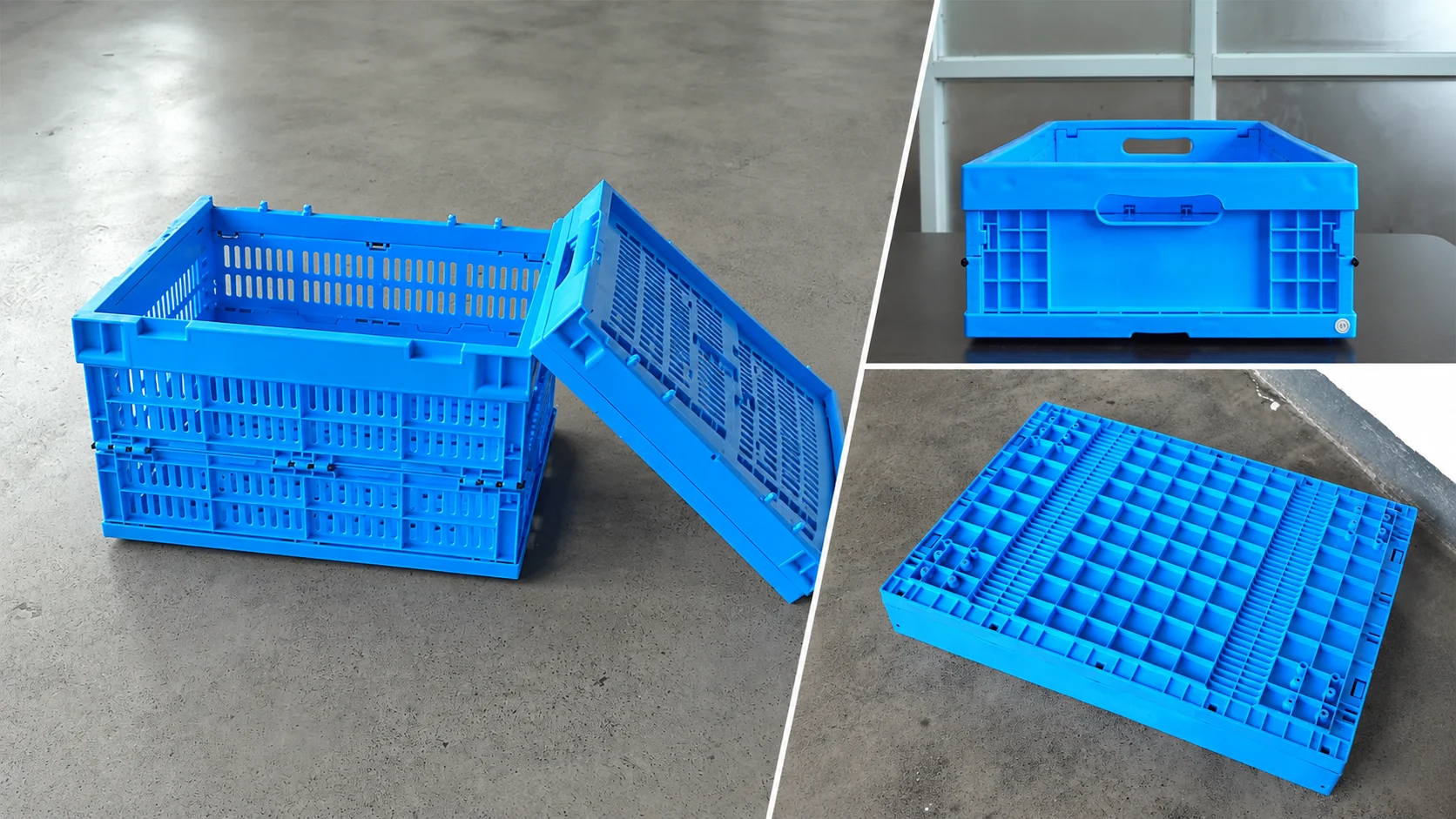
Plastic folding crates are reusable containers for storing, sorting and moving goods. They can be considered for warehouse picking, parts handling, retail replenishment and other jobs where containers are needed during use but take up unnecessary space when empty.
Different designs suit different tasks. Solid walls help contain loose goods, clear walls make the contents visible, and side-opening panels offer another way to access stored items. The folding feature allows empty crates to be stored in a lower-profile format between uses.
Here are seven practical applications, followed by the main points to check when choosing a crate.
Warehouse Storage and Stock Organisation
Folding crates can organise packaged stock, accessories and spare parts on warehouse shelving. Instead of leaving separate items loose on a shelf, staff can group them by product, order or storage location.
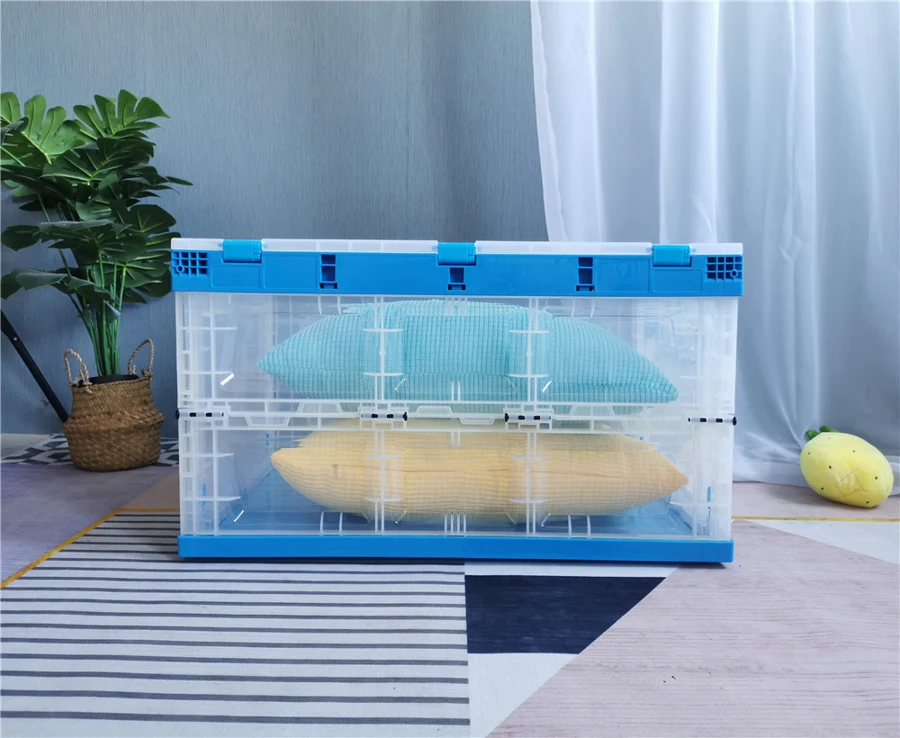
A clear folding crate allows a quick visual check of the contents. A solid-wall model can be considered for smaller items, provided the wall joints and base openings do not allow those items to escape. Labels remain useful for identifying batches and quantities.
Measure the goods and the shelf space before choosing a size. External dimensions determine whether the crate fits the storage area; internal dimensions determine what it can actually hold.
Manufacturing Components and Assembly Supplies
Workshops and production teams can use plastic folding crates to group parts and supplies for a particular task. Possible contents include packaged fittings, plastic components, cables and workshop consumables.
For example, an assembly team could prepare the components for a job in one crate and move it from the stores area to the workstation. Once emptied, the crate could be folded until the next batch is prepared.
The useful feature here is having a reusable handling container that matches the parts. Dividers or protective inserts may be needed for items that must remain separated. Sharp, heavy or sensitive components require additional checks before a model is selected.
Retail Stockrooms and Shelf Replenishment
Retailers can use folding crates to move packaged merchandise from a stockroom to the sales floor. Clothing, accessories, stationery and boxed household products are examples of goods that could be grouped for replenishment.
Where the process uses containers repeatedly, the same crates can be filled, moved, emptied and prepared for the next task. Folding them after unloading keeps unused containers from occupying their full assembled height.
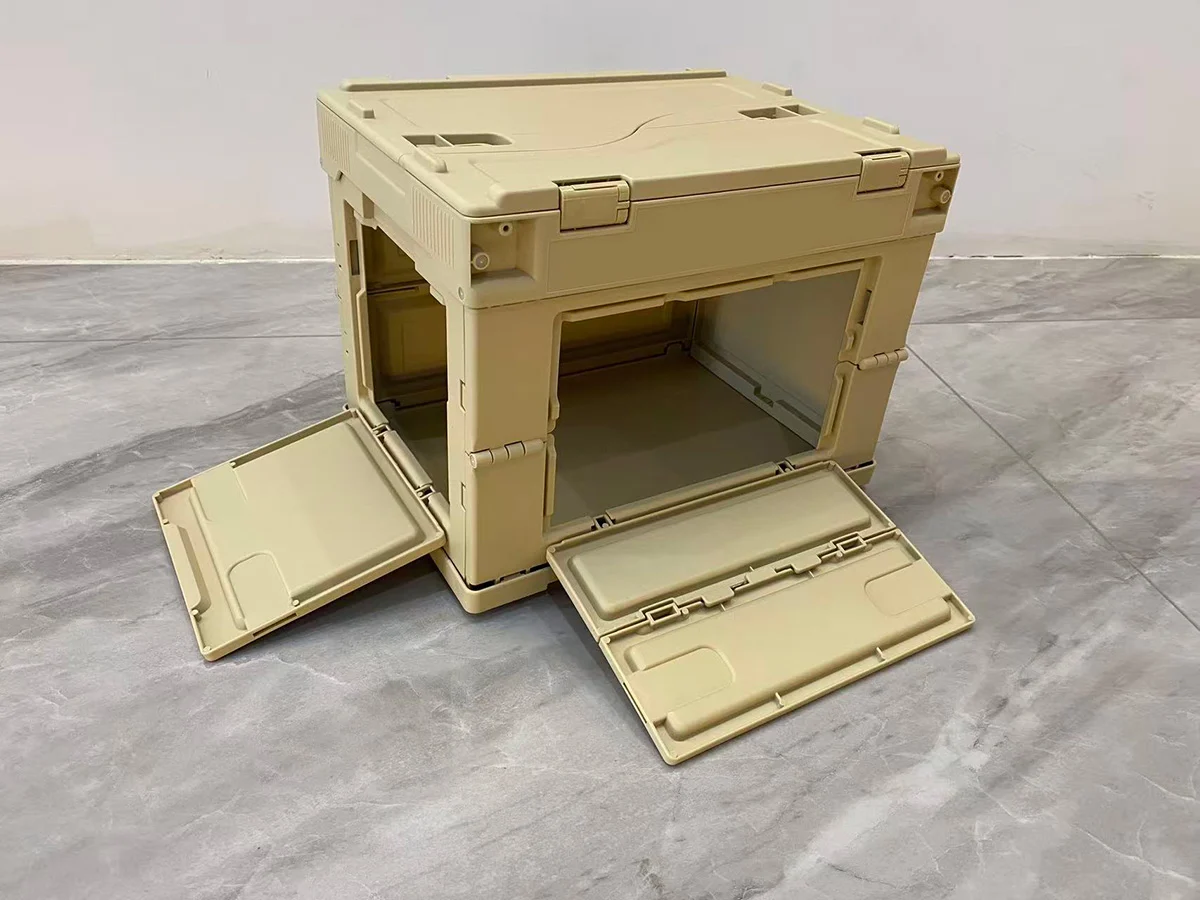
A lid can cover the contents during movement or temporary storage. If staff need access while a crate remains in a storage position, a side-opening design may be worth considering. Check the permitted access and stacking arrangement for that model.
E-commerce Picking and Returns Sorting
An e-commerce operation can use crates as internal order-picking containers. Staff can collect items for an order, move them to a packing bench and release the empty crate for the next job.
They can also keep returned goods separate while the products are checked and sorted. A label on each crate can identify an order or the next processing step.
In this application, the folding crate is part of the warehouse workflow. It does not need to be the package sent to the customer. Fragile items may still require cushioning, and outgoing parcels need packaging appropriate to the carrier and goods.
Branch Transfers and Returnable Distribution
Folding crates can be considered for moving suitable goods between branches, warehouses or other locations that have an organised container-return process.
The crate holds goods on the outward journey. After unloading, the empty container can be folded for collection or storage before another use. This arrangement is worth evaluating when the same locations exchange goods regularly.
Plan the return process as carefully as the delivery. Identify who folds the crates, where empties are stored and how they are counted and collected. The value of reusable containers depends partly on keeping them available for further use, rather than losing them after delivery.
Event Materials and Temporary Work Areas
Exhibitors, service teams and businesses working at temporary sites can consider folding crates for organising promotional items, display accessories, cables and other suitable equipment.
The containers can be unpacked at the destination and folded until the work is complete. They can then be reopened for packing and collection.
Side-access panels offer another opening for retrieving items, where the design and loading arrangement permit it. Valuable or delicate equipment may need separate protection; a storage crate is not automatically a protective transit case.
Office and Household Storage
Transparent folding crates can organise stationery, craft supplies, toys and seasonal items. Seeing the contents through the walls is useful when several containers are stored together.
Where a model has a side-opening panel, items can be retrieved through that opening rather than only through the top. Check that there is enough clearance to operate it in the cupboard or storage area.
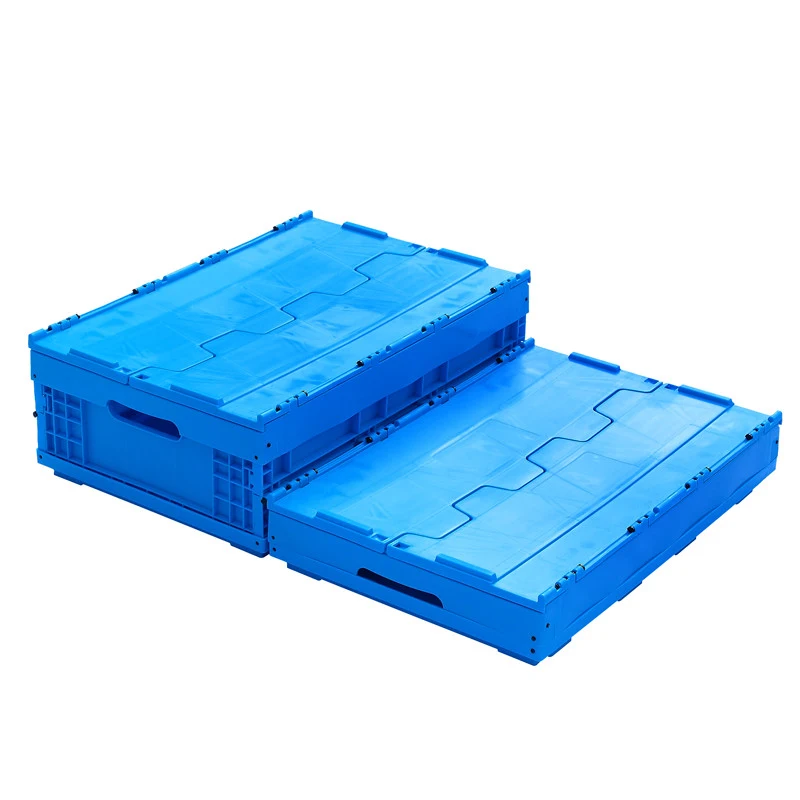
When the container is no longer needed, folding it provides a compact way to put it away until its next use.
Choosing the Right Wall, Lid and Access Design
Start with what the crate needs to hold and how people will use it.
- Solid-wall crates are worth considering for packaged goods and loose items that need containment, subject to the size of any joint or base openings.
- Clear folding crates suit tasks where viewing the contents is helpful.
- Folding crates with lids provide a cover over the goods. Waterproofing, dust sealing and security are separate properties that require confirmation.
- Side-access crates offer an additional opening, with model-specific restrictions on access while stacked.
- Ventilated crates allow airflow through openings and are a separate option for produce-handling applications.
If the intended use involves fruit, vegetables or other food, review the material grade, food-contact documentation, cleaning process and temperature conditions for the exact model. KEYUN’s ventilated collapsible plastic crates provide a related product family to discuss for produce handling.
When Does the Folding Feature Matter Most?
Folding is most relevant when crates spend part of their working cycle empty. Examples include containers waiting between picking jobs, empties collected from branches and storage boxes put away between seasons.
Compare the assembled and folded dimensions of the actual model. A lower empty height does not translate directly into the same percentage reduction in storage or freight costs: pallet layouts, collection frequency and handling time also affect the result.
Find a Plastic Folding Crate for Your Application
Before selecting a model, consider the goods dimensions and weight, the available storage space, the need for a lid or access panel, and the equipment used to move the container. Loaded stacking, temperature limits and any special requirements should be confirmed against the selected model’s specifications.
Explore KEYUN’s plastic folding crates to compare the available series and configurations. Please share your required quantity, preferred dimensions, intended use and delivery destination through our contact page for product information and a quotation.