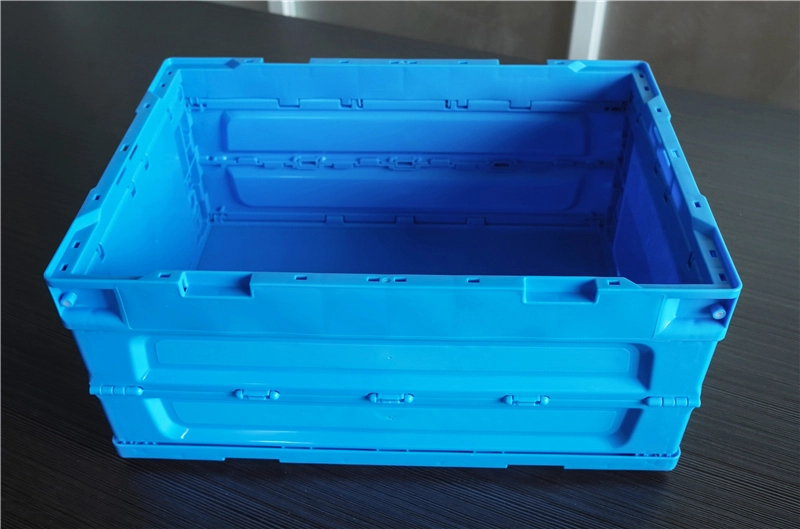
A medium-size collapsible plastic storage crate can support reusable storage and light-duty material movement while reducing the height required for empty returns. The product examined in this guide has outside dimensions of 530 x 365 x 240 mm and folds to a height of 85 mm. It weighs 2.09 kg, uses new polypropylene material and is listed with a 15 kg load-bearing value.
Those figures make the crate relevant to buyers who need a medium-size container that can be folded after unloading. However, the right decision depends on more than nominal capacity. The internal dimensions, loaded weight, folding cycle, cleaning method, stack arrangement and handling equipment all affect whether the crate will work in a real operation.
This guide explains how to interpret those specifications, which applications match this size and load, and which checks procurement teams should complete before placing a production order.
Collapsible plastic storage crate specifications at a glance
| Specification | Value | Why It Matters |
|---|---|---|
| External size | 530 × 365 × 240 mm | Defines fit with shelves, vehicles, pallets and handling equipment. |
| Internal size | 490 × 337 × 220 mm | Defines the usable packing envelope. |
| Folded size | 530 × 365 × 85 mm | Defines empty storage and return height. |
| Capacity | 36 L | Useful for initial comparison, but does not replace dimension checks. |
| Container weight | 2.09 kg | Must be added to the product weight when calculating total handling weight. |
| Listed load | 15 kg | Requires confirmation of the test method, support surface and operating conditions. |
| Material | New PP | Buyers should confirm the resin grade, additives and required documentation. |
Dimensions and listed load are based on the available product information. Buyers should confirm specifications, tolerances and test conditions before placing a production order.
What the 36L size means in practice
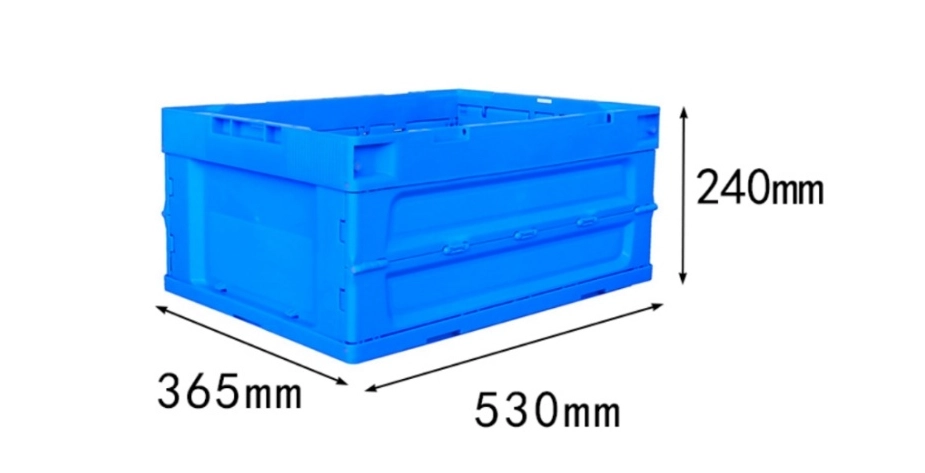
The crate’s internal dimensions are more useful than the 36L label when planning a load. A buyer has a usable envelope of 490 mm in length, 337 mm in width and 220 mm in height, subject to the actual wall shape, ribs and opening geometry. Products, dividers and protective packaging must all fit inside that envelope.
The stated internal dimensions mathematically represent about 36.3 liters if treated as a perfect rectangular space, which is consistent with the listed 36L capacity. The usable volume for a real product can be lower because molded corners, wall taper and closure features occupy space. For cartons or rigid components, test the exact packing pattern instead of using liters alone.
The outside dimensions are 40 mm longer, 28 mm wider and 20 mm higher than the listed internal dimensions. Those differences provide a useful reminder that warehouse fit and product fit are separate questions. External size determines whether the crate fits a rack, trunk, pallet layer or trolley. Internal size determines whether the contents fit.
How much space does folding save?
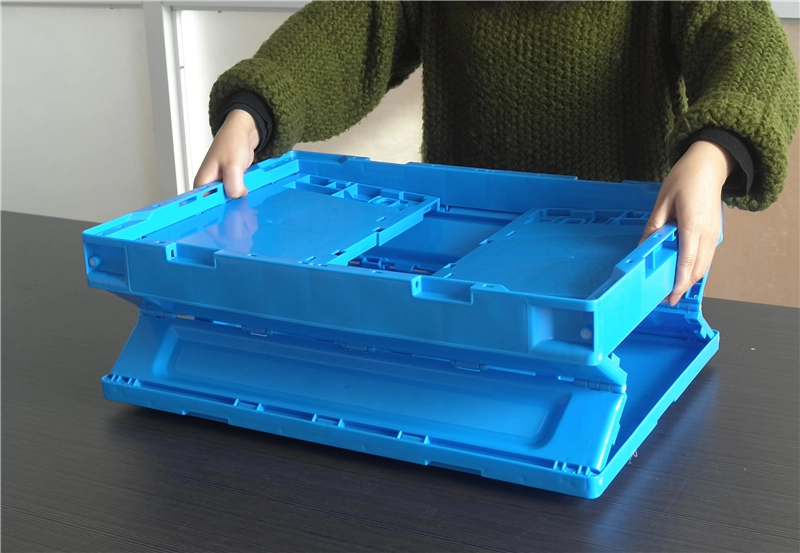
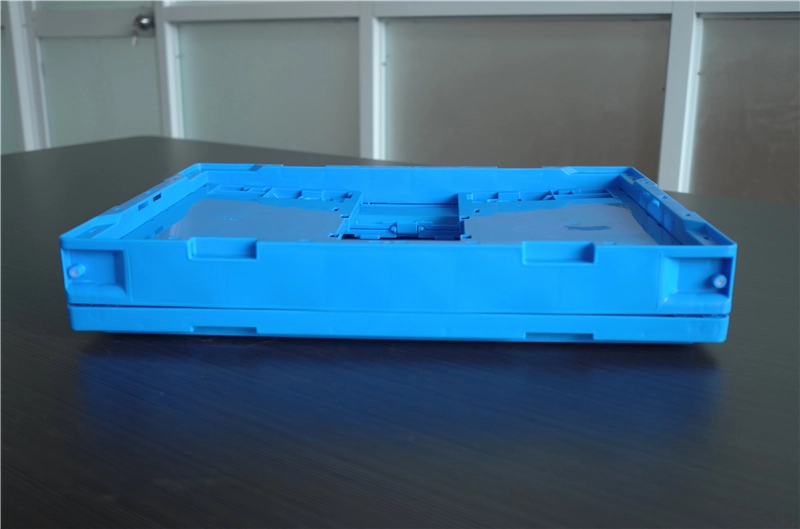
When erected, the crate is 240 mm high. When folded, it is 85 mm high. Based on height alone, folding reduces the crate’s vertical profile by approximately 64.6 percent. This can reduce the height needed for empty storage and return movements.
That percentage should not be presented as an automatic 64.6 percent freight saving. Vehicle utilization also depends on pallet height, stacking clearances, packaging, route rules and how securely folded crates can be stacked. Ask the supplier for the height of a defined stack of folded units and test the stack on the real return route.
Applications that match this model
Warehouse picking and internal transfers
The 36L format can suit packaged goods, accessories, replacement parts and other items that remain within the 15 kg listed load. Folding is useful when empty crates return from a packing or assembly area to a central storage point. Buyers should check how quickly operators can erect and fold the crate and whether the latches are easy to inspect.
Retail replenishment and backroom storage
A medium-size reusable crate can support store replenishment for apparel, household products, packaged snacks or general merchandise. The solid sides help contain smaller packaged items. If stores fold the crates after shelf replenishment, the lower empty height can make backroom storage and reverse transport easier.
E-commerce and order consolidation
For e-commerce operations, the model may be considered for order consolidation, returns processing or movement between picking and packing stations. The internal dimensions should be compared with the most common order profiles. Teams should also test labels, barcode positions and any dividers used to separate orders.
Vehicle and mobile storage
The source page presents the container for car-trunk organization and activities such as camping, fishing and picnics. Commercial buyers can apply the same idea to service vehicles, mobile teams, event equipment or rental kits. Before adoption, test whether the crate remains stable during braking and turns and whether the folded unit can be secured when empty.
Household and light commercial organization
The crate is also positioned for clothes, toys, snacks and general household items. For distributors and retailers, these uses can inform merchandising, private-label packaging or multipurpose storage ranges. Claims about food use should only be made when the exact resin and finished product have the required food-contact documentation for the destination market.
Understanding the 15 kg listed load
The product page lists a 15 kg load-bearing value, but it does not state the test method, temperature, support surface, load distribution or duration. Procurement teams should therefore treat 15 kg as a supplier value that requires confirmation for the intended process.
A uniform load of packaged textiles places different stress on the base than a concentrated metal component. The crate may also behave differently on a flat floor, a pallet deck or widely spaced conveyor rollers. Ask for the test conditions and run a sample with the heaviest real load. The total manual-handling weight is the product load plus the 2.09 kg crate weight.
Material and cleaning checks
The listed material is new PP, or polypropylene. PP is widely used for molded reusable containers, but the material description alone does not establish impact performance, chemical resistance, temperature range or regulatory suitability for a specific application. These characteristics depend on the resin grade, additives, design and test conditions.
If the crate will be washed, provide the supplier with the detergent, water temperature, pressure, cycle time and drying method. Inspect the folding joints, latch areas and base after repeated cycles. For food-contact use, request declarations and test records that identify the exact model and the market where the crate will be used.
Folding structure and durability checks
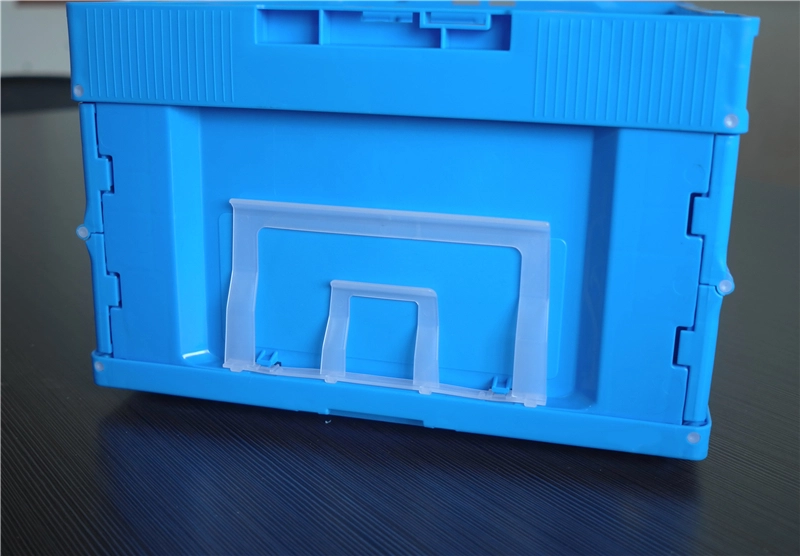
A collapsible crate adds moving walls, hinges or locking points to the basic container structure. These features create the empty-space benefit, but they also need inspection. During sample testing, repeatedly erect and collapse the crate, then check whether each wall locks fully and whether the top rim remains square.
- Confirm that operators can see or feel when every side is locked.
- Check for pinch points and follow the buyer’s workplace safety requirements.
- Inspect hinges, corners and latches after drops, washing and cold or hot exposure relevant to the operation.
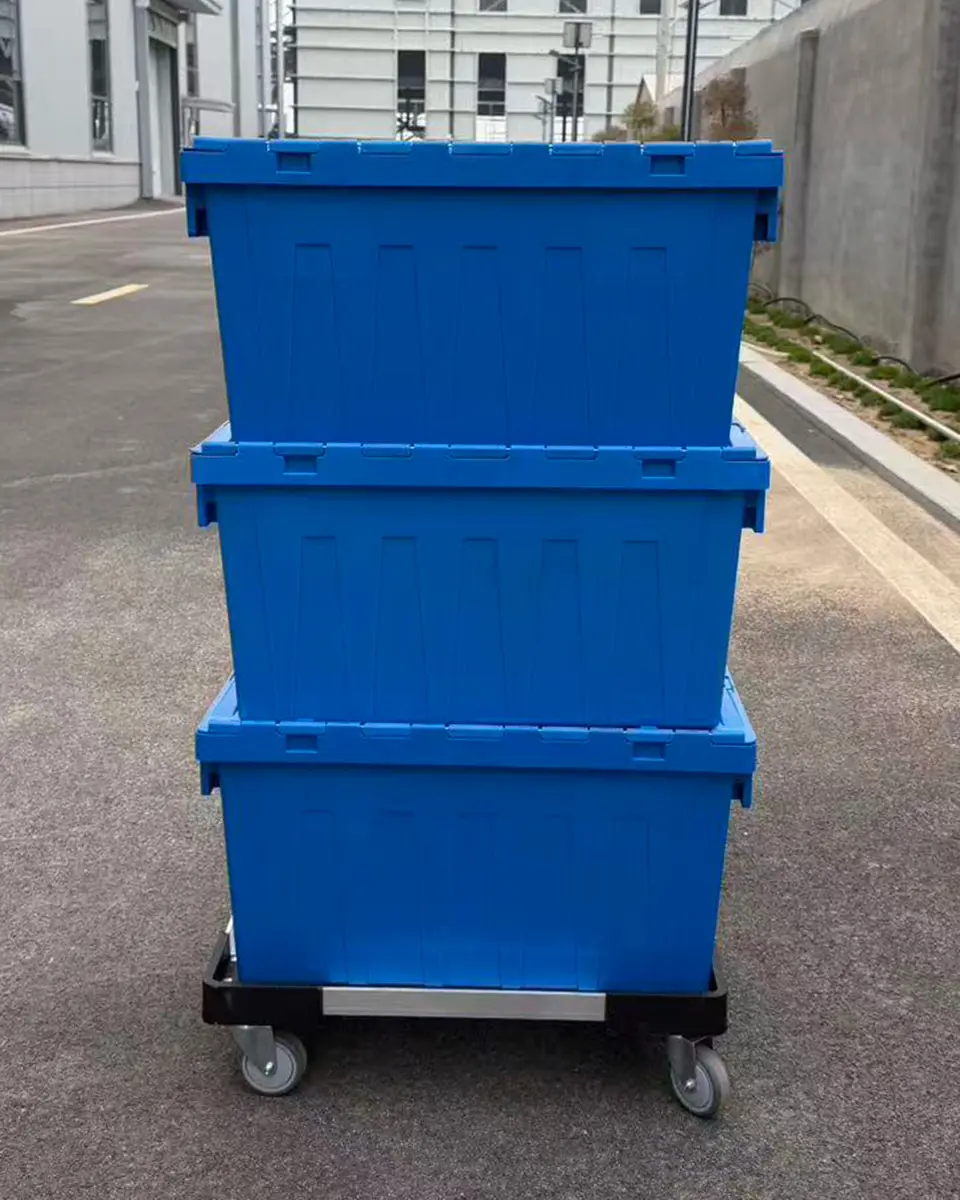
- Test a loaded stack for alignment and stability under the supplier’s stated conditions.
- Measure the height and stability of a stack of folded empties.
How it compares with a fixed-wall crate
| Decision Factor | Collapsible Plastic Crate | Fixed-Wall Crate |
|---|---|---|
| Empty storage | 85 mm folded height | Keeps its full height |
| Setup | Must be erected and securely locked before loading | Immediately ready to load |
| Moving parts | Folding joints, hinges and locks require inspection | Simpler wall structure with fewer moving components |
| Return logistics | Lower vertical profile when folded | May require nesting or more return-storage space |
| Selection priority | Folding efficiency, locking reliability and joint durability | Load capacity, wall strength and stacking performance |
The best option depends on the load, handling process, available storage space and empty-return requirements.
Questions to answer before ordering
- Will the largest product and all packaging fit within 490 x 337 x 220 mm and through the actual opening?
- Is the 15 kg value suitable for the real load distribution, support surface, temperature and handling cycle?
- How many erected or folded crates fit on the buyer’s pallet, shelf, vehicle position or trolley?
- What is the total height of the required number of folded crates?
- Does the locking mechanism remain reliable after the expected folding and washing cycles?
- Which PP grade and compliance documents are available for the exact model?
- Are colors, logos, labels, barcodes or other identification options available, and what quantities apply?
- Can samples be supplied for packing, handling, stacking, cleaning and route tests?
Recommended sample test
Load a sample with the heaviest expected product and any normal dividers or protective materials. Record packing quantity, total weight and loading time. Move it through the real route, including shelves, carts, doorways, ramps and vehicle transfers. If conveyors are involved, test the base on every transfer and roller section.
After unloading, fold the crate and measure a representative stack of empties. Repeat erection and folding for the number of cycles practical during the trial, then inspect locks, hinges, corners and base flatness. Wash the sample using the intended process when cleaning is part of the application.
When this collapsible crate is a good candidate
This collapsible crate is a practical candidate when the load fits within its internal dimensions, remains within the confirmed load conditions and benefits from an 85 mm folded height after use. Its 36L capacity and medium footprint suit a range of packaged-goods, retail, warehouse, vehicle and organization applications.
It is less suitable when the product exceeds the internal envelope, requires ventilation not provided by the selected wall style, needs a heavier confirmed load, or must meet compliance conditions that have not yet been documented. In those cases, compare a different size, wall design or container type.
Request a model recommendation
To receive a relevant recommendation and quotation, send KEYUN the product dimensions, weight per crate, required quantity, application, destination country and any pallet, trolley, conveyor, color, logo or cleaning requirements. Include photos or a packing drawing when the load is irregular. This information helps the team confirm which collapsible plastic crate is the better fit.
Frequently asked questions
What dimensions should buyers check
The outside dimensions are 530 x 365 x 240 mm. The listed inside dimensions are 490 x 337 x 220 mm. The folded size is 530 x 365 x 85 mm.
How much weight can the crate hold
The product page lists a 15 kg load-bearing value. Buyers should confirm the test method and operating conditions, then test the real load before a production order.
How much height is reduced when folded
The height changes from 240 mm to 85 mm, a reduction of approximately 64.6 percent based on the published dimensions. Actual storage or freight savings depend on the full stacking and transport arrangement.
Is the crate suitable for food
The source page markets the product for food-related use, but buyers should request model-specific food-contact documentation for the destination market before making a compliance claim.
What material is used
The listed material is new PP. Ask for the resin grade and any required regulatory or performance documents for the intended application.