Selecting plastic crates for seafood transport starts with the complete handling route—not with volume or price alone. A crate that works beside a processing line may not be suitable on a fishing vessel, in an iced load, inside a cold room or on a pallet moved by forklift. Buyers should match the crate’s construction, drainage, dimensions, stacking performance and cleaning design to the seafood product and the equipment used at every stage.
A plastic crate is also only one part of a cold-chain system. It does not chill the product by itself. Temperature control still depends on a validated combination of ice, chilled rooms, refrigerated vehicles or other cooling equipment. The crate must support that plan without creating avoidable handling, hygiene or stacking problems.
Where Plastic Crates Fit in the Seafood Cold Chain
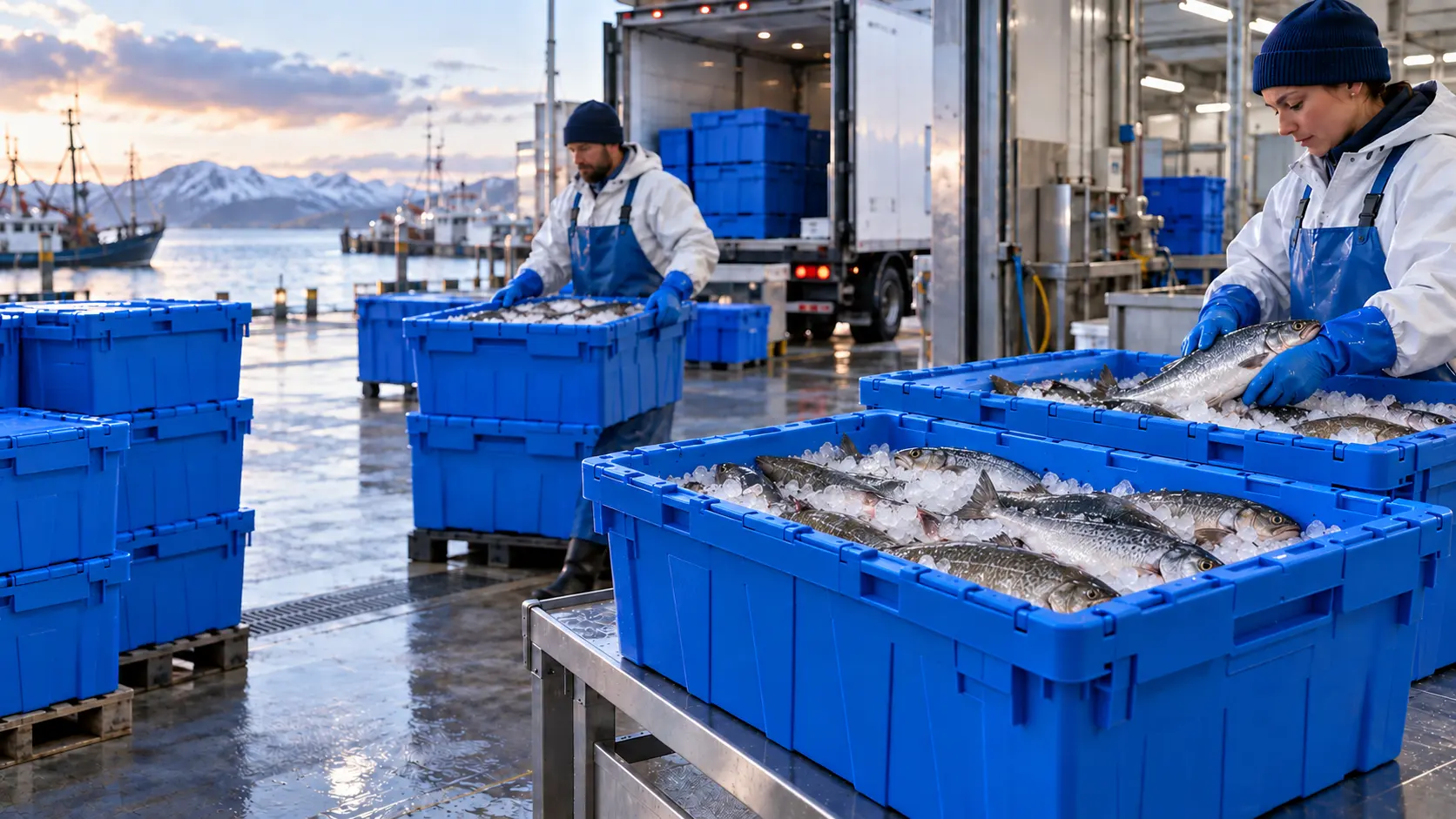
Reusable plastic fish crates can be used at several points between harvest and delivery: aboard vessels, during unloading and landing, for raw-material holding, inside processing plants, in cold storage and during road transport. The same general need appears throughout the route: contain the product, protect it from rough handling and create a repeatable unit that workers and equipment can move safely.
However, the operating conditions are not identical. A wet crate filled with whole fish and ice has different drainage and weight requirements from a crate holding packaged fillets. A container used manually on a small vessel has different size constraints from one running on a conveyor in a processing plant. The correct specification should therefore follow the actual workflow.
Start With the Product and Handling Route
Before comparing models, document the route from filling to empty return. Ask:
- What product will be packed—whole fish, fillets, shellfish, processed seafood or another chilled product?
- Will the product be loose, bagged, lined or otherwise packaged inside the crate?
- Will ice be added, and how much will the product plus ice weigh?
- Where will the crate be filled, stored, transferred, washed and returned?
- Will workers carry it manually, or will it move by pallet, dolly, forklift or conveyor?
- What temperatures and handling impacts will the loaded crate experience?
These answers determine the useful internal size, external footprint, wall pattern, drain design and stacking requirement. They also reveal whether a single crate can serve the whole route or whether different models are needed for different stages.
Choose Solid or Perforated Walls and Bases
Perforated crates can support drainage and airflow, which may be useful when wet seafood or ice is handled. Solid-wall crates can provide greater containment and help protect small items or packaged product. Neither construction is automatically better. The correct choice depends on how liquids, airflow, liners and contamination risks are managed in the buyer’s process.
For example, an open pattern that releases meltwater efficiently may be unsuitable if liquid can drip onto lower loads or surrounding packages. A solid base may contain liquid but require a deliberate emptying and cleaning procedure. Buyers should review the complete stack, not only a single crate on a showroom floor.
Plan Drainage for Ice and Meltwater
Seafood handling often involves water, ice, slime and condensation. Drainage openings should be positioned so that liquid does not remain trapped in corners or channels during normal use. The crate should also be easy to tip, drain and wash without forcing workers into awkward handling.
Drainage must still match the destination process and transport rules. Some operations need controlled containment, liners or absorbent materials rather than unrestricted drainage. When requesting a quotation, describe the amount of ice, expected meltwater and whether liquid may leave the container.
Confirm Food Contact Documentation
The phrase “food grade” should not be accepted as a complete specification. Ask the supplier for documentation that applies to the exact material, model, intended contact and destination market. Confirm whether the crate will have direct or indirect food contact, whether a liner is used and what traceability information is required by the buyer’s quality system.
Do not assume that a particular color, smooth surface or plastic type proves compliance. Documentation and suitability should be verified for the actual product supplied. If a tender, retailer or regulator requires a particular declaration or test report, include that requirement in the RFQ before tooling, production or shipment.
Check Cleaning and Hygiene Requirements
Reusable crates need a repeatable cleaning and inspection process. Smooth accessible surfaces, rounded internal corners and fewer dirt traps can make washing easier. Drainage channels should not retain residue, and damaged crates that cannot be cleaned effectively should be removed from service.
The crate material must also be compatible with the buyer’s actual washing method, including water temperature, pressure, detergents and sanitizers. Cleaning performance should be validated by the operator; it should not be inferred from appearance alone.
Verify Low-Temperature and Impact Performance
Cold conditions can change how a plastic product responds to impact. A crate that survives a room-temperature demonstration is not automatically proven for chilled or frozen use. Ask for the model-specific service-temperature range and for any relevant impact or drop-test conditions. Compare those conditions with the intended load, temperature and handling height.
The coldest point in the route may occur in a freezer, a refrigerated vehicle, a winter loading area or direct contact with ice. Give the supplier the realistic minimum and maximum temperatures rather than using the warehouse set point alone.
Match Load Capacity to the Real Stacking Pattern
The load is more than the net weight of seafood. Include ice, liners and any retained liquid. Then define the maximum stack height, how long the crates remain stacked and whether the stack sits on a level floor, pallet or another support. Uneven loading and poor alignment can change the stress on rims, corners and bases.
Ask for load data for the exact crate model and the relevant test conditions. Avoid using a generic number from another size or construction. When stacking is critical, verify that the top rim and base interface remain stable under the intended load and temperature.
Check Handling Equipment Compatibility
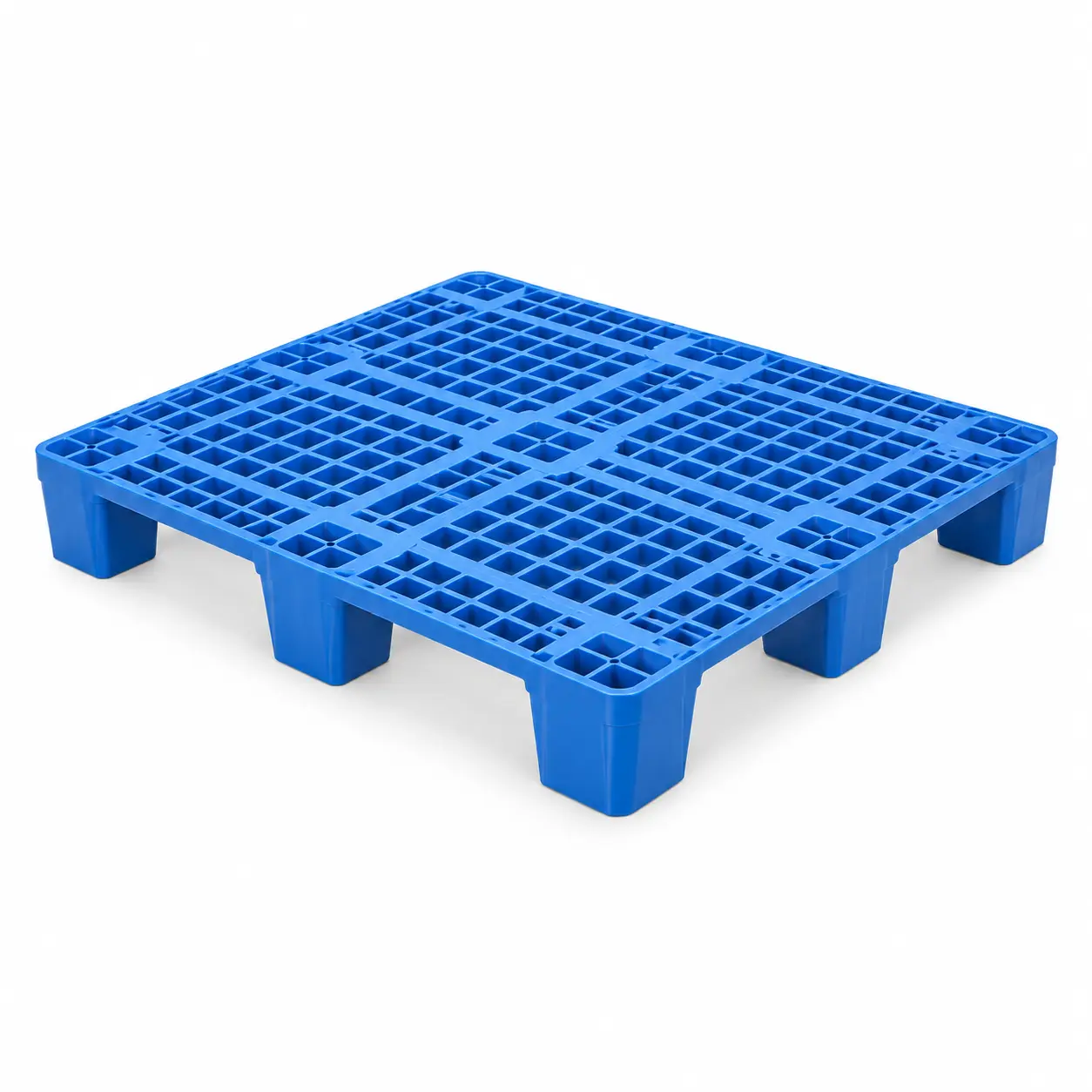
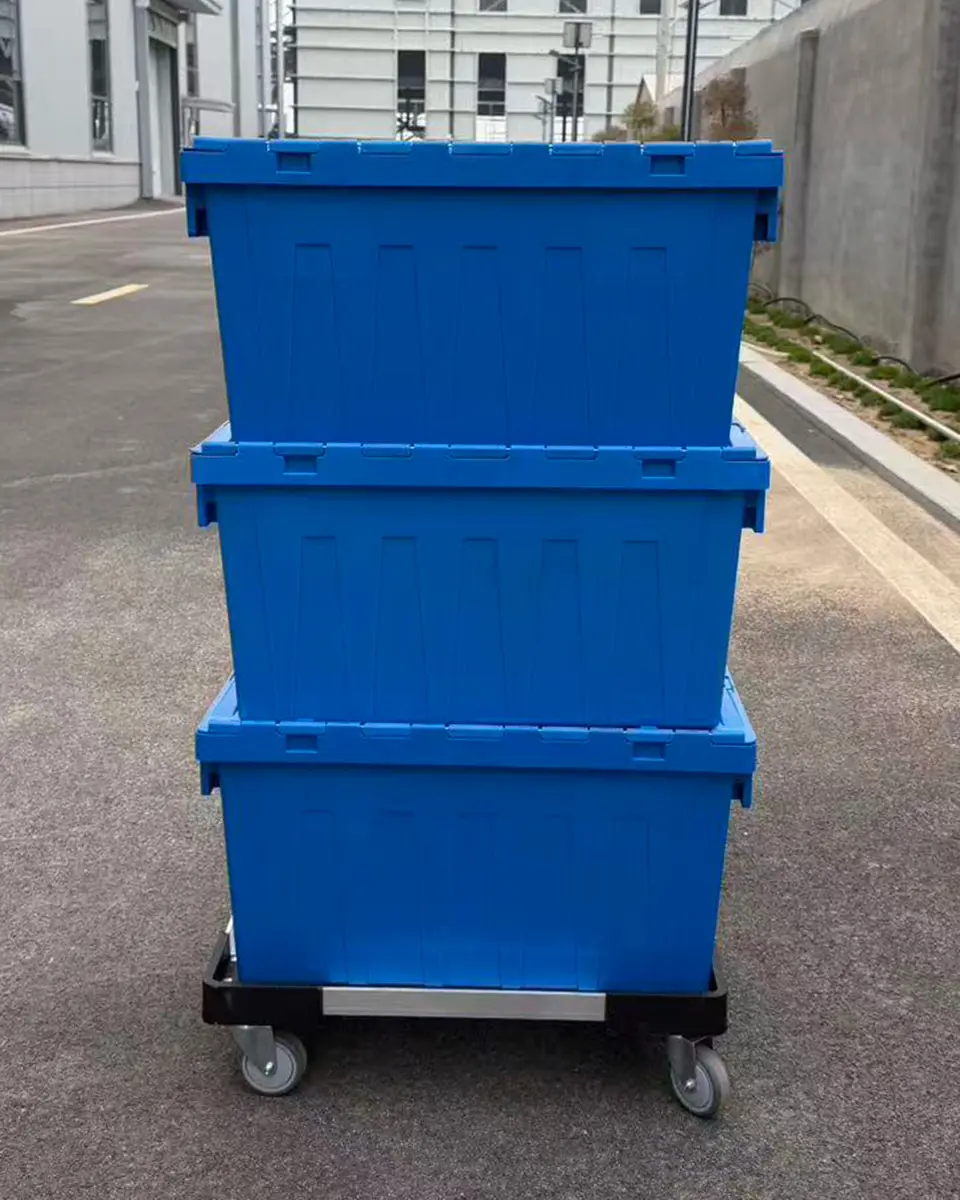
A well-selected crate should fit the complete material-handling system. Confirm the external footprint, hand-grip position and loaded weight for manual handling. For mechanized operations, check compatibility with pallets, dollies, conveyors, guides and automated equipment. If crates will be moved as a palletized unit, confirm the stacking pattern and overhang limits.
Forklift forks should act on the pallet or on a container specifically designed for direct fork entry—not on an ordinary crate. Share drawings or photographs of the handling equipment with the supplier when clearances are tight.
Consider Empty Return and Storage Efficiency
In a reusable system, empty-return cost can be as important as loaded transport. Stack-and-nest designs can reduce the volume of empty crates when their orientation is changed. Collapsible designs may provide greater volume reduction but introduce hinges, moving parts and a different cleaning workflow.
Calculate return efficiency with the real vehicle, pallet footprint and nesting or folding height. Also consider how workers identify the correct orientation and how lids, if required, are managed. An attached-lid container can simplify lid control for some closed-loop routes, while open fish crates may be more practical where rapid icing, drainage and washing are priorities.
Plastic Seafood Crate Selection Checklist
| Selection factor | Buyer question | Why it matters |
|---|---|---|
| Product and load | What seafood, packaging and ice weight will each crate hold? | Determines volume, loaded weight and handling method |
| Walls and base | Is containment, drainage or airflow the priority? | Affects leakage, cooling, protection and cleaning |
| Drainage | Where should meltwater go, and may it leave the crate? | Prevents trapped liquid and process conflicts |
| Food contact | Which model-specific documents are required? | Supports buyer and destination-market checks |
| Cleaning | Which wash temperature, pressure and chemicals are used? | Helps confirm material and design compatibility |
| Temperature | What are the real minimum and maximum service temperatures? | Cold conditions can affect impact performance |
| Stacking | What is the loaded weight, height, duration and support? | Defines the actual stacking demand |
| Equipment | Will it use pallets, dollies, conveyors or automation? | Avoids footprint and clearance problems |
| Empty return | Will crates stack, nest or collapse when empty? | Influences return freight and storage space |
Information to Include in Your RFQ
A useful request for quotation should include:
- Seafood type and the stage of the cold chain where the crate will be used
- Required internal or external dimensions and any fixed pallet footprint
- Maximum product weight plus ice, liners and retained liquid
- Preferred solid or perforated walls and base, with drainage requirements
- Minimum and maximum service temperatures
- Maximum stack height, stacking duration and floor or pallet support
- Manual handling, pallet, dolly, forklift, conveyor or automation details
- Cleaning method, water temperature, pressure and chemicals
- Required food-contact declarations, test reports or buyer-specific documents
- Order quantity, color, logo, destination country and delivery schedule
This information allows the supplier to recommend a model based on the application rather than sending a generic catalog answer. It also helps the buyer compare quotations on the same basis.
Frequently Asked Questions
Are all plastic crates suitable for direct food contact?
No. Suitability depends on the exact material, manufacturing controls, intended use and applicable documentation. Ask for evidence for the model and market involved.
Do seafood crates need drain holes?
Often, but not always. Drainage can help remove meltwater, while some routes require containment or liners. The correct design depends on the product, icing method and transport rules.
Can plastic crates be used in freezing conditions?
Some models may be suitable, but performance must be verified for the intended temperature and load. Request the service-temperature range and relevant impact-test conditions for the exact model.
Should seafood crates stack or nest?
Loaded crates generally need stable stacking. Nesting can reduce empty-return volume when the system is designed for it. Choose according to the loaded route, washing process and return logistics.
What information is needed for a quotation?
Send the seafood type, dimensions, loaded weight, ice and drainage requirements, temperature range, stack height, handling equipment, cleaning method, quantity, destination and required documents.
Choose a Crate for the Complete Route
The best plastic crate for seafood transport is the one that fits the full operating route: product, ice, temperature, cleaning, stacking, handling equipment and empty return. A clear application brief reduces the risk of buying a crate that looks suitable but fails at a critical transfer point.
Request a model recommendation from KEYUN. Send us your seafood application, required size, loaded weight, temperature range, drainage needs, stack height, quantity and destination. Foshan Keyun Import & Export Co., Ltd. will review the information and recommend suitable reusable plastic crate options for further confirmation.