Collapsible plastic crates are reusable rigid containers designed with side panels that fold inward when the crates are empty. When opened, the panels lock into position to create a stable container for handling, storage, transportation, and distribution. After the contents are removed, the crate can be folded down to reduce the space required for empty storage and return transport.
For businesses operating reusable logistics loops, this folding design can make a meaningful difference. Reducing empty-container volume can improve warehouse space utilization, return transportation efficiency, vehicle loading, and the overall handling of reusable packaging.
Collapsible plastic crates are commonly considered by businesses looking for a reusable alternative to one-way packaging or a more space-efficient solution than permanently rigid containers.
Typical applications include fresh produce distribution, retail replenishment, food handling, manufacturing, warehouse operations, and other supply chains where containers repeatedly move between known locations.
However, choosing the right collapsible crate requires more than selecting a size from a catalog. Buyers should consider the actual load, internal dimensions, stacking requirements, handling equipment, cleaning process, operating environment, and return-logistics system.
How Do Collapsible Plastic Crates Work?
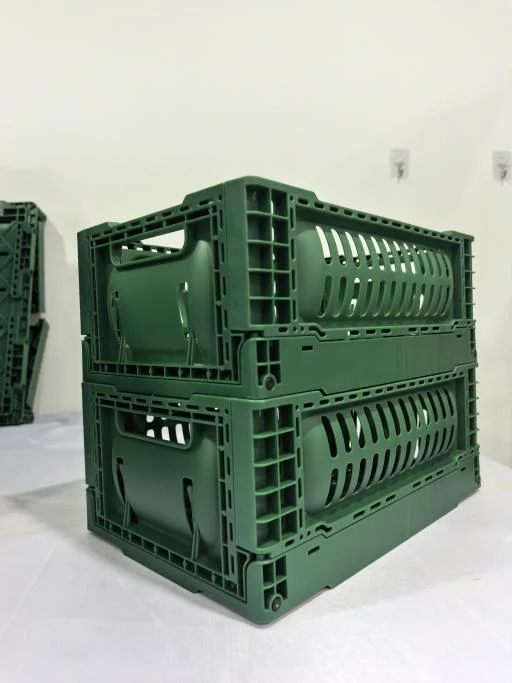
A collapsible plastic crate typically consists of a rigid base, folding side and end panels, hinges or connection points, and locking areas that hold the walls securely in the operating position.
To prepare the crate for use, the operator raises the folding panels and ensures that the corners or locking areas are fully engaged. The crate can then be filled, stacked when permitted by the selected model and load conditions, transported through the logistics process, emptied, and folded for return or storage.
The folding sequence is important.
Panels should move according to the intended product design without forcing hinges, catches, or locking mechanisms. A crate that is not completely opened may not sit squarely, while incorrectly folded crates can create unstable or uneven stacks.
For B2B buyers, it is therefore important to evaluate not only the crate itself but also how it will fit into the actual operating process:
- Who opens and folds the crates?
- Where are they filled and emptied?
- How are loaded crates transported?
- How are empty crates returned?
- Where are collapsed crates stored?
- What equipment is used to move them?
The best crate is one that works efficiently throughout the complete handling cycle.
Why Do Businesses Use Collapsible Plastic Crates?
Reduced Empty Storage and Return Volume
One of the main advantages of collapsible plastic crates appears after delivery, picking, or line-side consumption.
A permanently rigid crate occupies almost the same external volume whether it is loaded or empty. A collapsible crate reduces its height after folding, allowing more empty units to be stored or transported within the same available space.
This can be particularly valuable in closed-loop or returnable packaging systems where empty containers regularly travel back to a warehouse, distribution center, production facility, supplier, or packing location.
The actual space reduction varies between crate designs. Buyers should therefore compare the open height, folded height, collapsed stack configuration, and number of crates per pallet or vehicle position rather than relying on a generic percentage.
A Reusable Solution for Repeatable Logistics Loops
Collapsible plastic crates are particularly useful where products move repeatedly between defined locations.
Examples include:
grower → packing facility → distribution center
distribution center → retail store → distribution center
warehouse → production line → warehouse
supplier → manufacturing plant → supplier
Using standardized reusable crates can make it easier to establish consistent pallet patterns, rack locations, vehicle loading plans, handling procedures, and return processes.
However, reusable packaging also requires management. Businesses should consider crate ownership, collection, cleaning, inspection, repair or replacement, and loss prevention as part of the complete packaging system.
Consistent Handling and Standardized Footprints
For warehouses and distribution operations, consistent external dimensions can simplify material handling.
Depending on the selected crate model, collapsible crates may be used with:
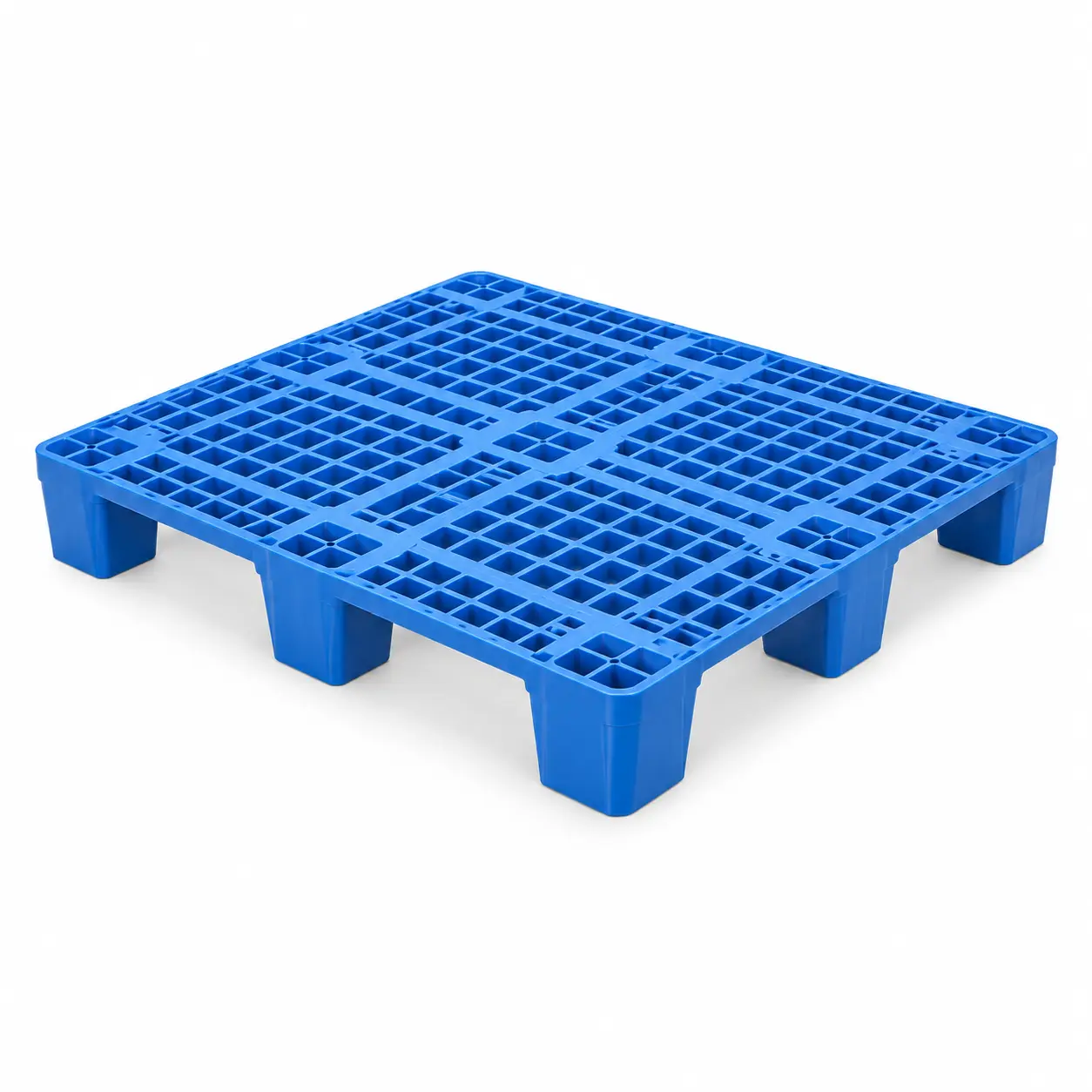
- Plastic pallets
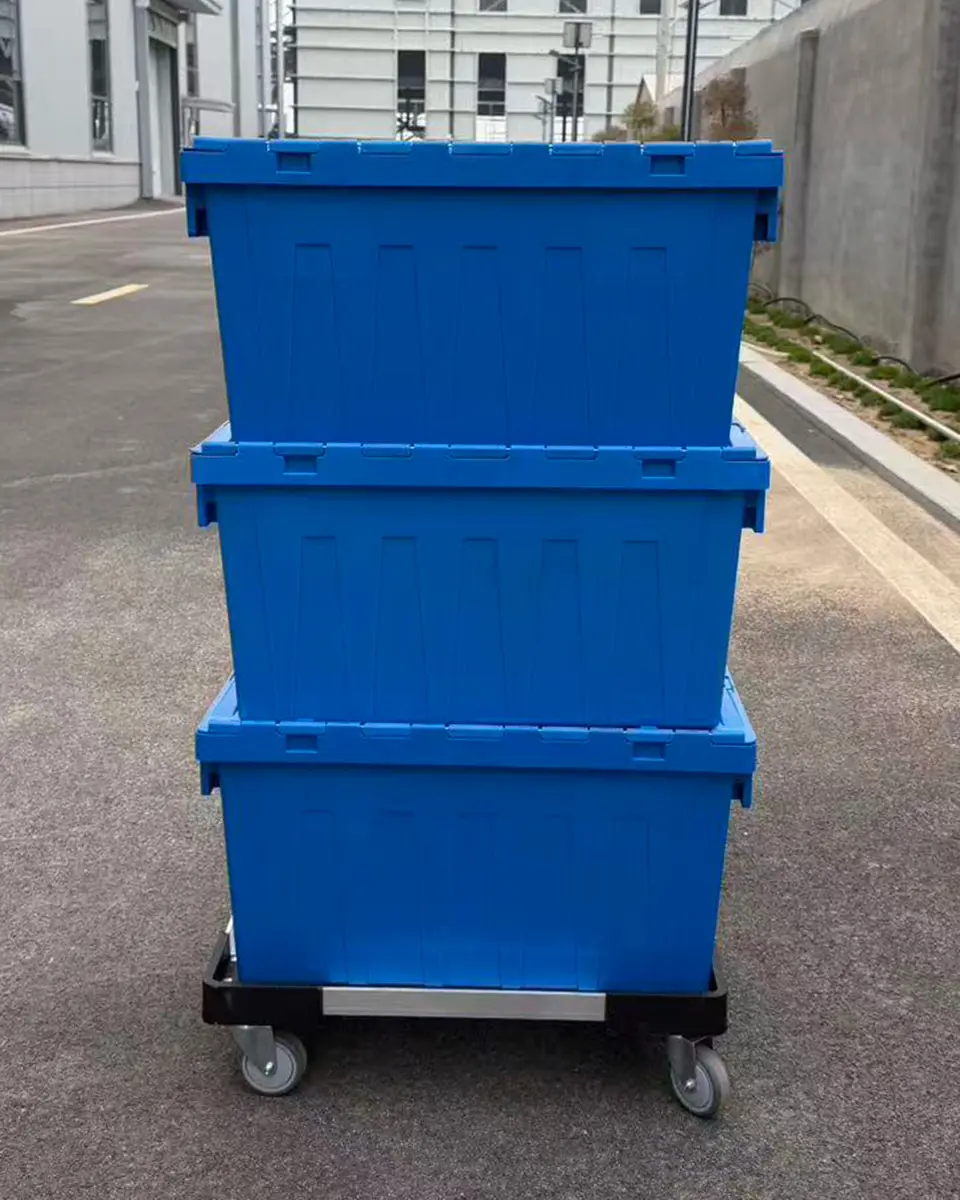
- Crate dollies
- Warehouse racks
- Conveyors
- Material-handling equipment
- Delivery vehicles
Compatibility should always be verified using the exact dimensions and contact points of the selected crate and equipment.
Different Ventilation and Wall Options
Collapsible crates are available with different wall and base configurations.
Ventilated designs can support airflow and visual inspection in applications such as fresh produce handling, while more closed designs may be preferred where containment or surface protection is more important.
The term “collapsible” only describes the folding function.
It does not automatically confirm food-contact suitability, temperature resistance, drainage performance, load capacity, or compliance with a particular industry requirement. These factors should be verified for the exact crate model and application.
Common Applications of Collapsible Plastic Crates
Collapsible plastic crates are used across a wide range of commercial and industrial supply chains. The most suitable design depends on what is being transported and how the crate moves through the operation.
Collapsible Plastic Crates for Produce
Fresh fruits and vegetables often move through several handling stages before reaching the final distribution point.
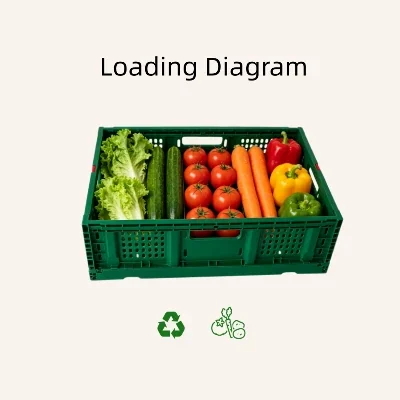
Ventilated collapsible crates can be considered for produce collection, sorting, packing, storage, and distribution where airflow, repeated handling, and efficient empty returns are important.
Buyers should evaluate ventilation patterns, internal dimensions, drainage, cleaning requirements, stacking conditions, and applicable product-contact requirements before selecting a crate.
Collapsible Crates for Retail Distribution
Retail distribution networks often move reusable containers between distribution centers and stores.
After products are unloaded or shelves are replenished, empty collapsible crates can be folded and consolidated for return transportation.
This makes them particularly relevant for operations where empty-container volume would otherwise occupy valuable truck or warehouse space.
Collapsible Crates for Warehousing and Logistics
Warehouses can use collapsible crates for picking, internal transfers, order consolidation, temporary storage, and reusable distribution loops.
Standardized dimensions can also help businesses plan pallet layouts, staging areas, racks, dollies, conveyors, and vehicle loading more consistently.
When crates need to interact with existing warehouse equipment, dimensional compatibility should be verified before purchasing.
Collapsible Crates for Manufacturing
Manufacturing facilities may use reusable folding crates to move components, parts, work-in-process materials, or finished goods between suppliers, storage areas, production lines, and assembly locations.
For industrial applications, buyers should pay particular attention to concentrated loads, sharp components, internal protection, dividers, liners, stack stability, and handling equipment.
Food and Cold-Chain Handling
Collapsible crates may also be considered for certain food-handling and cold-chain applications.
However, suitability should not be assumed simply because a crate is made from plastic.
The exact model, material, wall and base design, cleaning method, operating temperature, drainage requirements, and applicable food-contact or industry requirements should be confirmed before use.
Key Benefits to Evaluate
When comparing collapsible plastic crates, B2B buyers should evaluate measurable operational benefits rather than relying only on general product claims.
Important considerations include:
Empty-space efficiency
Compare the open and folded height and determine how many collapsed crates can be stored in a defined area or returned within a pallet or vehicle position.
Repeatable handling
A consistent footprint and defined opening, folding, and stacking process can simplify daily warehouse and logistics operations.
System compatibility
Check whether the crate dimensions and contact points are compatible with existing pallets, dollies, racks, conveyors, shelving, and vehicles.
Identification and organization
Color, labels, logos, barcodes, or other identification options can help separate routes, materials, customers, departments, or ownership groups.
Reusable logistics potential
Collapsible crates can form part of a returnable packaging system when collection, inspection, cleaning, and loss control are properly managed.
What Should B2B Buyers Consider Before Selecting a Collapsible Crate?
1. Start With the Load and Usable Internal Dimensions
External dimensions alone are not enough.
Document:
- Product dimensions
- Weight per unit
- Quantity per crate
- Total loaded weight
- Product orientation
- Required headspace
- Edge or surface sensitivity
Ask the supplier for usable internal dimensions and check whether handles, wall angles, hinges, or folding mechanisms reduce the available space.
For fresh products, consider ventilation, drainage, and product contact.
For industrial components, consider concentrated loads, sharp edges, and whether dividers, liners, or other internal protection are required.
2. Verify Stacking and Handling Conditions
A crate that performs well under one loading condition may not be appropriate under another.
Define the expected:
- Loaded weight
- Stack height
- Pallet pattern
- Floor conditions
- Storage method
- Transport method
- Handling equipment
If forklifts, pallet jacks, conveyors, pallets, or crate dollies are involved, verify dimensional compatibility and contact points.
Model-specific load and stacking specifications should be obtained from the supplier and evaluated against the actual operating environment.
3. Compare Return Logistics, Not Only Purchase Price
The lowest unit price does not necessarily result in the lowest operating cost.
For reusable logistics systems, consider:
- Folded dimensions
- Number of empty crates per return load
- Warehouse space required for empty crates
- Operator opening and folding time
- Cleaning requirements
- Sorting requirements
- Inspection procedures
- Expected reuse cycle
- Replacement and loss management
A practical sample trial can reveal operational issues that are difficult to identify from a quotation or product photograph alone.
4. Confirm Identification and Customization Requirements
Different operations may require different methods of identifying reusable crates.
Depending on the project, buyers may consider:
- Different colors
- Company logos
- Identification areas
- Labels
- Barcodes
- RFID systems
Confirm which options are standard and which require customization.
If labels, barcodes, or RFID are planned, test their location and readability within the real handling process.
5. Define Cleaning and Inspection Procedures
Reusable crates require an ongoing process for cleaning, drying, inspection, quarantine, and replacement.
The selected crate should be compatible with the intended cleaning method, and areas such as hinges, corners, drainage points, and locking mechanisms should be accessible for inspection.
Any food-contact, temperature, hygiene, or industry-specific requirement should be verified for the exact product before final approval.
How to Evaluate Collapsible Plastic Crates Before Purchasing
A structured evaluation process can help reduce purchasing risk.
Step 1: Map the Complete Logistics Route
Identify where the crate will be filled, stored, transported, emptied, folded, returned, cleaned, and prepared for reuse.
Step 2: Define the Load
Document the product dimensions, total weight, required internal space, handling requirements, and environmental conditions.
Step 3: Check Equipment Compatibility
Confirm compatibility with pallets, racks, conveyors, dollies, forklifts, vehicles, and any other equipment used in the operation.
Step 4: Compare Suitable Crate Designs
Evaluate usable dimensions, folded height, wall and base configuration, handling features, and system compatibility.
Step 5: Conduct a Sample Trial
Where possible, test the selected crate using the actual goods and operators.
Observe loading, stacking, transportation, folding, cleaning, labeling, and empty-return handling.
Step 6: Review the Complete Returnable Packaging System
Before final approval, confirm how crates will be collected, inspected, cleaned, stored, tracked, and replaced throughout their service cycle.
Collapsible Plastic Crates vs. Nestable Containers
Collapsible crates and nestable containers can both reduce the amount of space required for empty return logistics, but they achieve this in different ways.
A collapsible plastic crate reduces its external height by folding its side panels.
A nestable container reduces empty volume by allowing one empty container to fit inside another, typically through a tapered container design.
Collapsible crates may provide a compact folded configuration, while nestable containers eliminate the need to fold and unfold side panels.
The better option depends on the workflow, labor process, load, return route, equipment compatibility, and required container design.
For B2B buyers, the decision should therefore be based on the complete logistics process rather than empty-volume efficiency alone.
Frequently Asked Questions
Are collapsible plastic crates the same as nestable containers?
No. A collapsible crate reduces its empty volume by folding its side panels. A nestable container reduces empty volume by allowing empty containers to fit inside one another. Both can improve return logistics, but their structures and handling processes are different.
Can collapsible plastic crates be stacked when loaded?
Many collapsible crate designs are intended to stack while open, but suitability depends on the exact model, loaded weight, stack height, pallet configuration, and handling conditions.
Always verify model-specific stacking guidance before use.
Are collapsible crates suitable for fruits and vegetables?
They are commonly used in produce handling and distribution, particularly where ventilation, repeated handling, and efficient empty returns are important.
The selected model’s wall design, base design, ventilation, drainage, cleaning process, and applicable product-contact requirements should still be verified.
How much space do collapsible plastic crates save when folded?
There is no universal percentage.
Compare the open and folded dimensions of the exact model and calculate how many collapsed crates can fit within the available warehouse, pallet, or vehicle space.
Can collapsible plastic crates be customized?
Depending on the project and product configuration, options may include color, identification, logo, and other requirements.
For KEYUN projects involving size, color, or logo requirements, availability, tooling implications, minimum order conditions, and technical feasibility should be confirmed during specification review. This keeps the claim aligned with the customization language already used in your original draft.
What information should I provide when requesting a crate recommendation?
Providing detailed application information helps suppliers evaluate product fit more accurately.
Useful information includes:
- Goods being transported
- Required usable internal dimensions
- Loaded weight per crate
- Expected quantity
- Application and logistics route
- Required stack arrangement
- Pallet or dolly dimensions
- Handling equipment
- Cleaning method
- Environmental conditions
- Color, logo, label, or identification requirements
Choosing the Right Collapsible Plastic Crate for Your Operation
The best collapsible plastic crate is not simply the model with the lowest purchase price or the smallest folded height.
It should protect the load, fit the available handling equipment, stack reliably under the intended conditions, work efficiently for operators, and reduce unnecessary space during empty storage and return transportation.
Start with the actual goods and logistics route. Then compare usable dimensions, folded dimensions, wall and base design, handling requirements, and compatibility with the rest of your material-handling system.
For larger B2B projects, a sample trial can also help verify whether the selected crate performs as expected before wider implementation.
Looking for Collapsible Plastic Crates for Your Operation?
Explore KEYUN Collapsible Plastic Crates or send us your required dimensions, load, application, handling method, and estimated order quantity.
Our team can discuss suitable configurations based on your storage, handling, distribution, and return-logistics requirements.